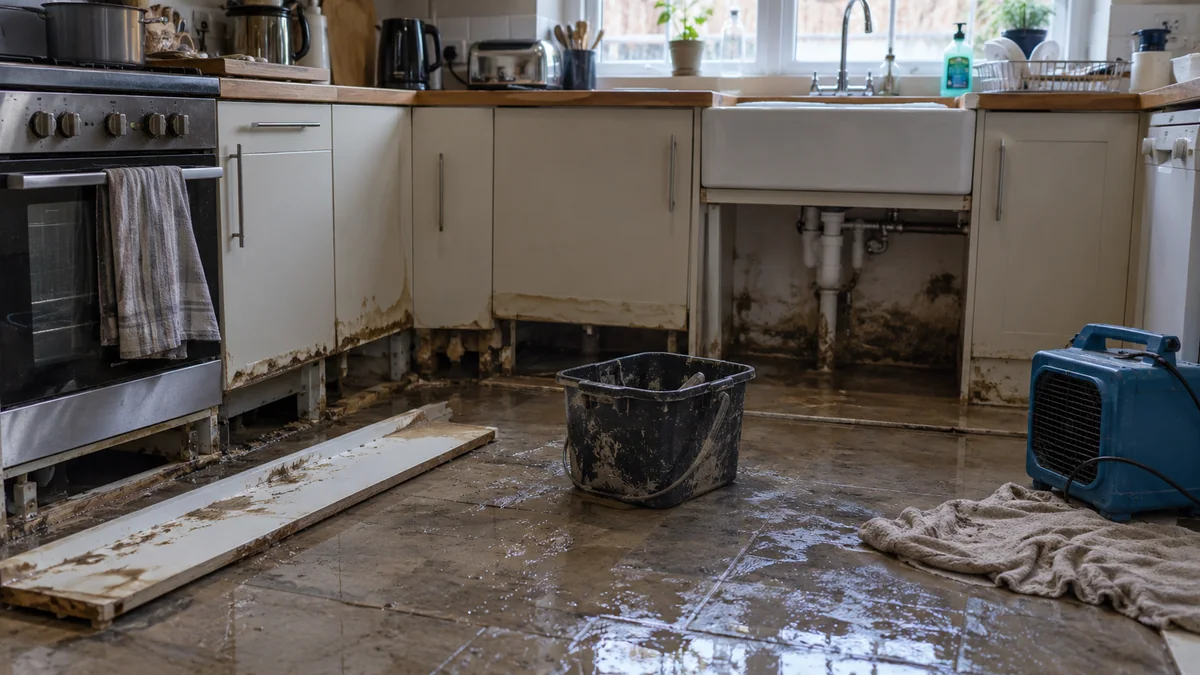
The first decision is safety
Do not switch on flooded sockets or appliances. Where water may be contaminated, avoid handling wet materials without suitable protection. Photograph the extent of damage and discuss removal with your insurer before throwing fittings away, unless doing so is urgently necessary for safety.
Cabinet materials make a difference
Chipboard and MDF cabinet bases can swell and lose strength after soaking. A solid timber door may be salvageable even when the cabinet behind it is not. Laminates and edge seals can conceal swelling at joints. A dry-looking face is not evidence that the board or fixings have recovered.
Water behind the fitted units
A kitchen has many hidden routes for water: under plinths, behind end panels, around service penetrations and below appliances. If these spaces remain shut, drying the room air may not dry the structure. Contractors should inspect where necessary without causing needless extra damage.
Worktops, sinks and services
A worktop may be affected around sink cut-outs and joints even if its upper surface looks sound. Plumbing connections, isolation valves and appliance hoses should be checked. Electrical circuits and appliances exposed to floodwater need appropriate assessment; do not test them yourself to see whether they still work.
Planning a sensible replacement
If units need replacing, consider materials and details that make future cleaning easier, such as removable plinths and accessible services. Choose a layout with regard to the actual flood risk rather than paying for products promoted as universally floodproof.
Before agreeing to a new kitchen
Make sure cleaning, wall and floor drying and any contamination issues have been addressed. A new kitchen fitted over damp flooring or wet wall linings may be damaged again. Ask whether the price includes removal, disposal, making good, plumbing, electrics and the moisture checks needed before installation.
Look behind the units before deciding the extent
Kitchen plinths can conceal standing water, swollen cabinet bases and damaged flooring. A unit may look perfectly serviceable from above while the carcass has lost strength at its bottom edge. Ask for photographs of the hidden areas and an explanation of which units are physically damaged rather than agreeing immediately to a full replacement kitchen.
If floodwater may have been contaminated, cleaning needs more care than ordinary household washing. Food-contact surfaces, stored food and porous materials must be considered separately. Electrical appliances and circuits exposed to water should not be energised until checked by a competent person.
Sequence matters more than speed
Before refitting cupboards, the floor, wall bases and service penetrations need to be assessed and allowed to dry appropriately. New units installed across damp plaster or an unexamined floor void can hide the problem and make later access difficult. Ask how the drying contractor has confirmed that the structure is ready for reinstatement.
Record what is being removed and keep receipts if an insurance claim is involved. Your insurer may wish to inspect or authorise stripping-out work, although immediate safety measures should not be delayed.
Rebuild with a future flood in mind
In homes with a history of repeat flooding, some owners choose easily removable plinths, higher-positioned service connections and finishes that are easier to clean. Any alteration to socket heights, plumbing or appliances should be designed by the relevant competent tradesperson; there is no one arrangement suitable for every kitchen.
A transparent quotation distinguishes insured flood repairs from elective improvements. That makes the costs easier to understand and avoids arguments about what the contractor was asked to deliver.
Agree the handover before fitting
A reinstatement quotation should make clear who disconnects and reconnects plumbing, appliances and electrical supplies; who checks the wall and floor beneath the units; and who is responsible if concealed damage is found. Record model details of undamaged appliances before removal. Where a matching replacement is disputed, distinguish cosmetic differences from damage which makes a unit unusable. The contractor should not simply fit a new kitchen over a surface whose drying status is uncertain. Ask for an inspection record or written confirmation from whoever managed the drying. If the property is still insured for the incident, check that the insurer has agreed any alterations before they are ordered.
Useful UK guidance
These independent resources explain flood risk, planning ahead and recovering after damage. Always follow emergency services and official warnings if flooding is happening now.
GOV.UK flood preparation · National Flood Forum property protection · Government property adaptations · Citizens Advice