Two complementary ideas
Flood resistance seeks to reduce the amount of water entering. Flood resilience accepts that water may enter in some events and aims to reduce lasting damage and make cleaning and drying easier.
Choose finishes thoughtfully
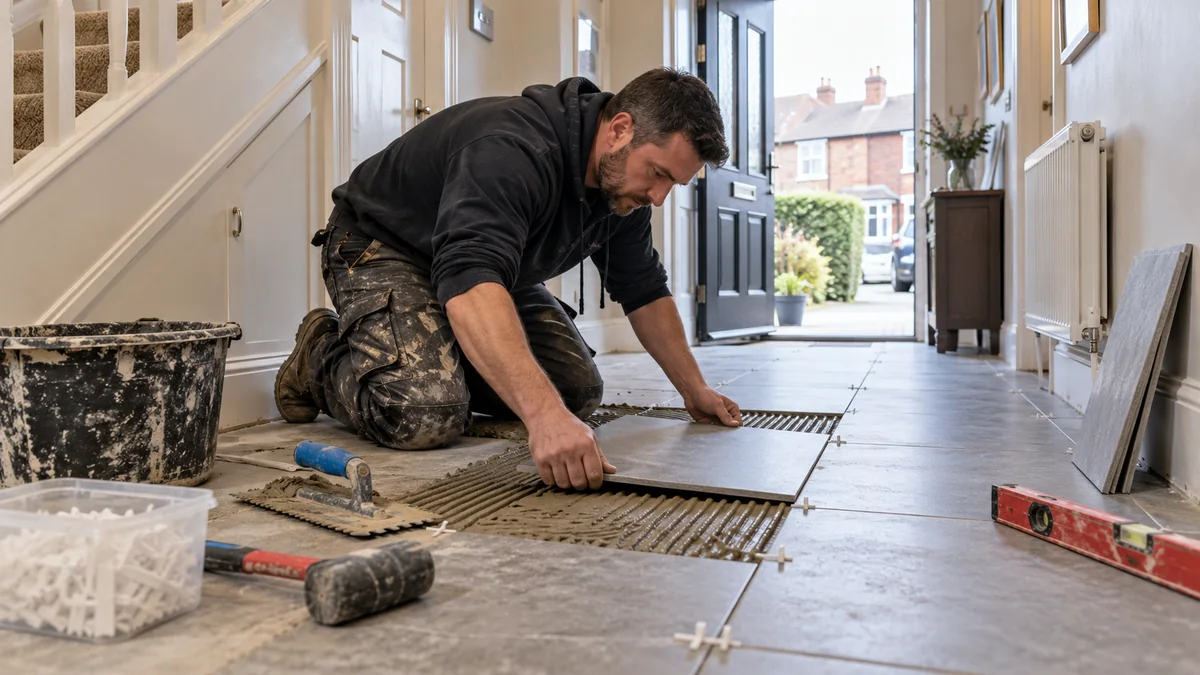
Tiles and other suitable resilient floor finishes, removable skirting and carefully selected wall finishes can sometimes reduce disruption after a future flood.
Raise vulnerable services
Electrical outlets, heating controls and valuable appliances may be relocated above likely flood levels where safe and practical.
Plan for cleaning and drying
Accessible cavities, suitable details around insulation and flooring, and considered drainage can make post-flood work less destructive. Individual specifications matter.
Structural caution
Do not seal a building against significant flood depths without considering water pressure, buoyancy and structural effects. Specialist flood-resilience advice is important.
Get a coordinated specification
Ask how the proposed measures work together, their maintenance needs and whether they will affect ventilation, damp control or the building’s historic fabric.
Choose details that are easier to recover
Where repeated flooding is a realistic possibility, the aim may be to reduce the damage and shorten recovery rather than claiming to prevent every drop of water getting in. Appropriate hard floor finishes, accessible service routes, replaceable low-level joinery and careful kitchen details may be more practical than vulnerable materials repeatedly replaced after each event. These choices need to suit the construction and should be coordinated, not selected as isolated products.
Check what will be hidden when the room is finished
Discuss wall insulation, timber supports, adhesives, floor build-up and ventilation before closing up. A hard tile finish alone achieves little if its substrate is left wet or unsuitable for flooding. If you are altering electrical circuits or plumbing, consider how they can be inspected after a future event. Ask for drawings or photographs of concealed work, and keep maintenance instructions for barriers, valves and pumps. A repair that is straightforward to inspect next time can be more valuable than an attractive finish that must be stripped out again.
Decide what kind of flooding the house faces
There is no single collection of products that makes every property resistant to floodwater. Surface runoff towards a door is different from sewage backing up through a drain or a river flooding a whole street. Look at previous depth, speed, duration, contamination and the likely points of entry before spending on improvements.
Official flood maps provide a starting point, but local drainage faults and historic incidents are also worth investigating. A whole-property survey can establish priorities rather than treating each room separately.
Keeping water out and recovering afterwards are different strategies
Resistance measures try to reduce or delay entry, for example with suitable doorway barriers and treatment of low openings. Resilience measures accept that water may sometimes enter and aim to reduce the damage and make cleaning and drying easier. Depending on the flood risk and building, a combination may be appropriate.
Trying to hold back deeper water without considering pressure on walls and floors can create structural concerns. Products and installation methods should be specified for the actual conditions, not selected solely from photographs or adverts.
Make services easier to inspect and reinstate
Where refurbishment is already planned, consider the location and access of vulnerable electrical sockets, appliance connections, heating controls and other services. A competent electrician or engineer should advise on safe placement and applicable requirements. Avoid improvising wiring alterations after flooding.
Simple changes such as removable kitchen plinths or accessible inspection panels may also make it easier to inspect concealed water after a future incident.
Materials must suit the whole building
Washable floor finishes and moisture-tolerant internal details can make recovery easier, but the substrate behind them still matters. In older solid-wall properties, the drying behaviour of existing masonry and plaster needs particular attention. Sealing the surface with an inappropriate product can create hidden problems.
If a wall or floor has been contaminated, the decision to retain material depends on hygiene and condition as well as moisture readings.
Set priorities and compare proposals
The first budget should go towards addressing known routes of entry and making essential services safe, rather than replacing sound materials for cosmetic reasons. Ask contractors to identify the flood scenario their measures are designed for, their limits, the necessary permissions and the maintenance required.
Keep drawings and operating instructions somewhere safe. Barriers that are difficult to fit or whose seals are not maintained may be less useful when a warning arrives.
Reliable further information
For current warnings, official flood-risk maps and safety advice, use the relevant government service. This website cannot assess live conditions at your home.
Government flood guidance · National Flood Forum · Citizens Advice