What they are designed to do
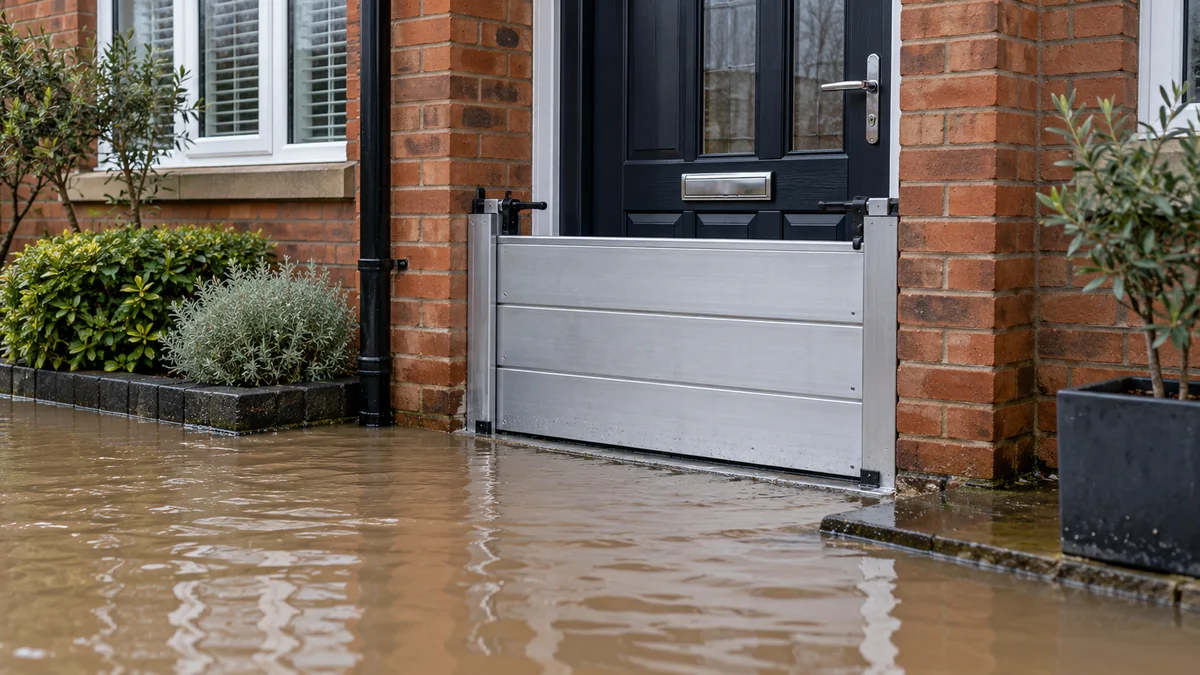
Flood doors and doorway barriers aim to limit water entering through particular openings. Performance depends on installation, the surrounding wall, the threshold and the conditions for which the product is designed.
Not a whole-house guarantee
Water may find another route through walls, vents, drains or floors. Products cannot make every property watertight in every flood.
The surrounding structure
A barrier puts pressure onto adjacent construction. In deeper flooding, trying to exclude water can put walls and floors under strain. Advice should reflect expected depths and the building’s design.
Maintenance and deployment
Removable barriers are only useful if someone can fit them in time and seals remain in good condition. Consider who will be home and how warnings are received.
Standards and evidence
Ask suppliers for evidence of testing, limitations, fitting instructions and maintenance needs. An attractive product photograph tells you little about actual performance.
Before buying
Start with a flood-risk assessment of the whole property. Compare the cost and reliability of resistance measures with changes that make recovery quicker if water does enter.
Why a doorway barrier is only one element
A well-fitted barrier may reduce water entering through a threshold during shallower flooding, but water can travel through airbricks, walls, drains and service penetrations. A barrier must match the opening and its fixing detail. Water pressing against a structure can introduce loads that the building was not designed to resist, particularly as depth increases. This is not a product to choose purely from photographs or a claimed water depth on a sales page.
Practical questions before ordering
Ask the supplier or installer how the opening will be surveyed, whether the product has relevant test evidence, what maximum conditions it is suitable for and how sealing will be maintained. A removable barrier also needs accessible storage and somebody able to fit it when a warning arrives. Discuss what will happen if flooding occurs while you are away, whether doors can still be used for safe escape and how water already inside the property will be dealt with. Inspect fixings and seals periodically.
Reliable further information
For current warnings, official flood-risk maps and safety advice, use the relevant government service. This website cannot assess live conditions at your home.
Government flood guidance · National Flood Forum · Citizens Advice