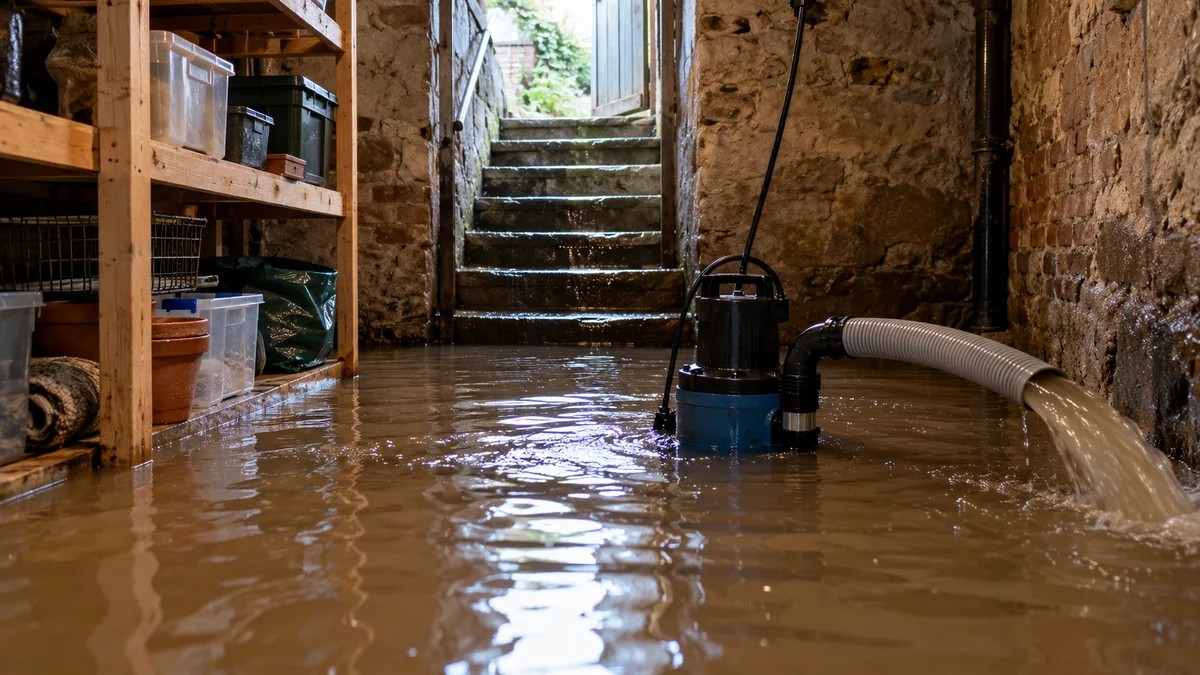
Where might it come from?
Cellars can flood because of surface runoff, defective drainage, a high groundwater level, leaking services or water passing through below-ground walls and floors. Sometimes more than one source is involved.
Check safety before entry
If there is any chance of submerged electrical installations, do not enter until a competent person has assessed the risk. Avoid contaminated or deep water.
Why quick waterproofing can fail
Painting a coating onto damp masonry may simply trap moisture or fail under water pressure. Basement waterproofing has to deal with water sources, structural conditions, drainage and maintenance.
Could a pump help?
Pumped systems may be suitable in particular designs, but pumps depend on power, maintenance and a reliable discharge route. Backup arrangements need consideration.
What the investigation should include
Record when water appears, its depth, any recent drainage problems and whether neighbouring cellars are affected. A surveyor or specialist can then recommend appropriate investigations.
Agree the work in stages
Ask for a written diagnosis before committing to tanking, a cavity drainage membrane or a full refurbishment. Understand the maintenance obligations and the proposed warranty.
Understand how water entered the basement
Water can come down external steps, seep through walls or floors, enter through a drain or rise with groundwater. Those routes need different solutions. A temporary pump may remove standing water without addressing the cause; pumping against very high external water pressure can in some circumstances create additional problems. Avoid entering a flooded basement where electrical installations, contaminated water or structural instability could be present.
Planning a lasting repair
A contractor should establish the entry route and the intended use of the basement before proposing waterproofing or permanent pumping. Discuss drainage discharge, electrical backup, alarm arrangements, maintenance and what happens during a power failure. In older masonry, impermeable internal finishes may change how moisture behaves rather than solving the outside problem. Obtain a specification that explains interfaces around steps, floor joints and services, with clear information about ongoing inspection and maintenance obligations.
Reliable further information
For current warnings, official flood-risk maps and safety advice, use the relevant government service. This website cannot assess live conditions at your home.
Government flood guidance · National Flood Forum · Citizens Advice