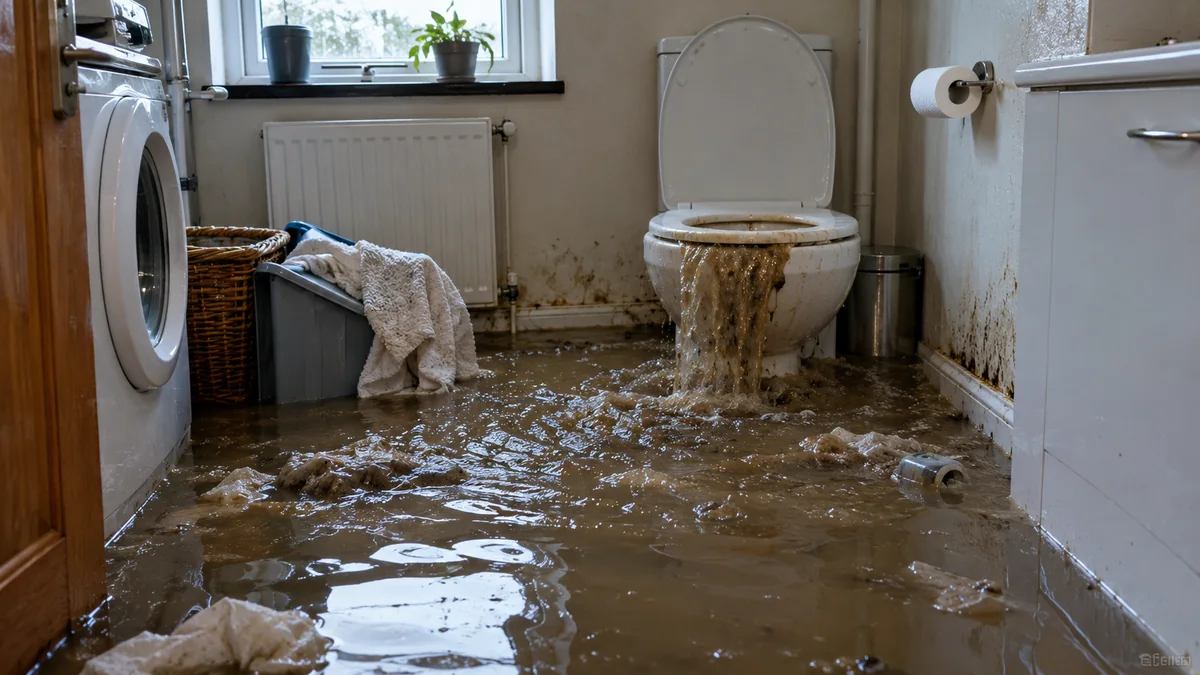
Treat it as contaminated
Sewage can contain harmful microorganisms. Keep people and pets away from affected rooms and avoid unnecessary contact. If electrical equipment is affected, stay clear until it has been made safe.
What may be happening
During heavy rainfall a combined sewer can surcharge, pushing wastewater back towards lower connections. A private blockage can produce similar symptoms. Distinguishing between them is important.
Call the right organisation
Contact your water company about suspected public sewer flooding. If only your private drainage is affected, a drainage specialist may need to investigate. If there is an immediate health or safety threat, follow emergency advice.
Do not install a valve without advice
A non-return valve can help in some situations, but an unsuitable valve can block the property’s own wastewater discharge during an event. The design and maintenance arrangement matter.
Evidence for insurance
Take photographs safely, note when the water appeared and contact your insurer before disposal or major remedial work. Keep a record of who you spoke to.
After the water goes
Contaminated items may need specialist handling. Agree a cleaning, drying and reinstatement plan with your insurer or a suitably experienced contractor.
Assume wastewater may be hazardous
Sewage backing up through a toilet, shower or floor drain can expose the household to harmful microorganisms and damaged electrical equipment. Keep people and pets out of the affected space and avoid using fixtures that may feed the surcharged drain. Do not investigate by climbing into a manhole or putting hands into wastewater. Report the problem promptly to the relevant sewerage provider or drainage professional, depending on which pipe is responsible.
Find out who owns the failed section
If neighbouring homes are also affected, the fault may lie in a shared sewer rather than a private branch. A drainage contractor can assess private pipework, but the water company may be responsible for public sewers and certain shared pipes. Photograph the incident, record whether rainfall coincided and ask for written findings before paying for major excavation. Once the wastewater is removed, contamination and hidden moisture may require specialist cleaning and monitored drying.
Reliable further information
For current warnings, official flood-risk maps and safety advice, use the relevant government service. This website cannot assess live conditions at your home.
Government flood guidance · National Flood Forum · Citizens Advice