Where the water comes from
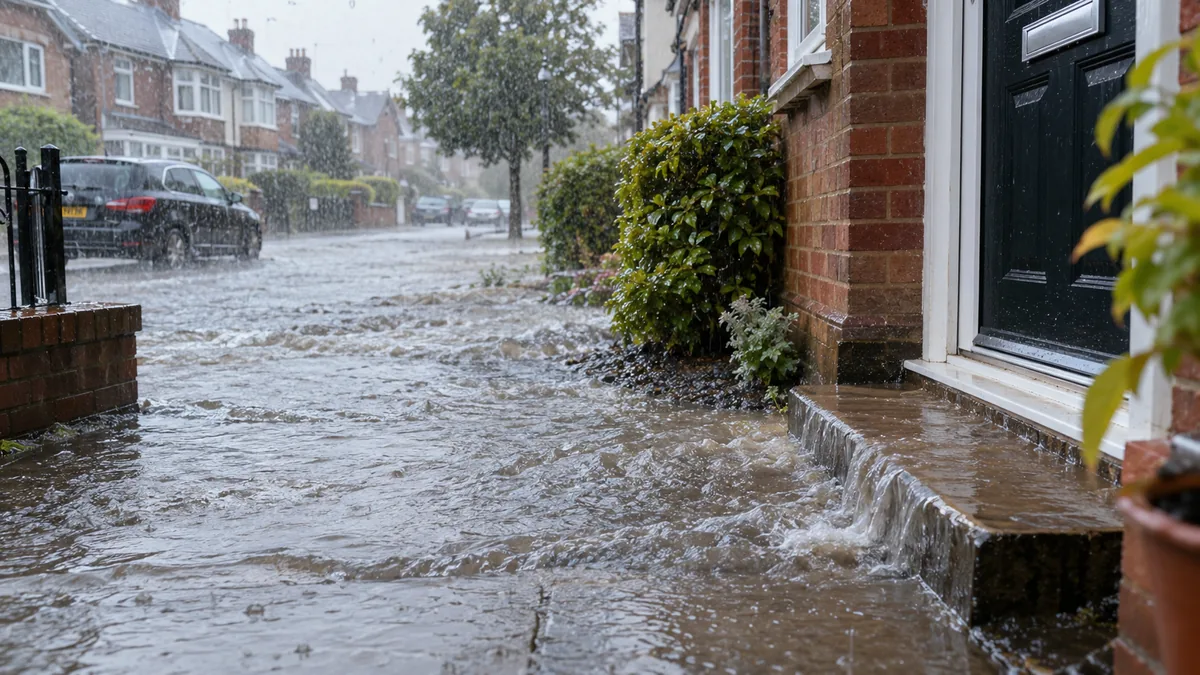
When rain falls faster than the ground or drainage network can absorb and remove it, it flows across roads, paths and gardens. It can collect in dips, at doorways or at the bottom of sloping drives. This is often called surface-water or pluvial flooding.
Why location matters
A house downhill from a road, a paved area or neighbouring land may receive runoff even when there is no river nearby. Older combined drainage systems may also struggle during very heavy storms.
Clues worth recording
Note which direction the water travels, where it first gathers and whether gullies are blocked. Photographs taken safely during rainfall can be more useful to a contractor than a description after everything has dried.
Is the public drain responsible?
Road gullies are often maintained by the highway authority; public sewers may be the water company’s responsibility. Private drains, gullies and landscaping may fall to the owner. Do not assume you must pay to repair equipment you do not own.
Possible improvements
Depending on the site, work might involve clearing drains, changing levels, installing suitable channel drainage or creating properly designed storage and infiltration. A soakaway is not right for every soil or location.
When to seek help
If water repeatedly approaches the building, arrange an assessment before choosing a solution. Redirecting water without understanding where it will go may simply move the problem to another property.
Why a house far from rivers can still flood
Intense rain can exceed the capacity of gullies and local drains, or simply run over the ground faster than it can soak in. Roads, drives and patios may direct water towards a low entrance even when the river remains far away. The shape of the immediate neighbourhood is important: kerbs, walls, slopes and past resurfacing work can create unexpected flow routes.
Look for the weakness in your own property
Check whether paving falls towards the house, whether drains have effective outlets and whether thresholds, garages or airbricks lie below surrounding levels. A temporary barrier may help shallow flooding but will not solve water entering through the floor or drainage system. Photograph the route during rainfall, where safe, and ask for a coordinated assessment before paying for isolated repairs. Check official flood-risk maps, but remember they cannot predict every local blockage or sudden storm.
Reliable further information
For current warnings, official flood-risk maps and safety advice, use the relevant government service. This website cannot assess live conditions at your home.
Government flood guidance · National Flood Forum · Citizens Advice