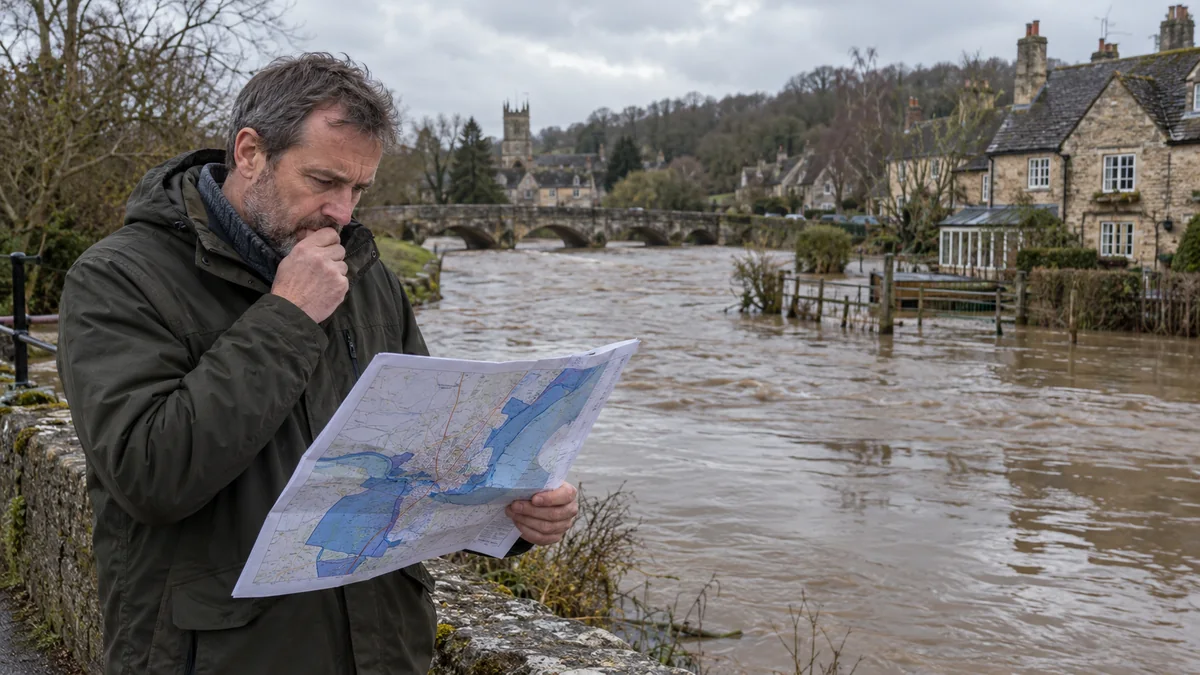
Begin with official flood maps
Check the relevant national risk mapping service and consider all sources of flooding, not just rivers. Surface-water and groundwater risks may be relevant far from the coast.
Ask direct questions
Have the buildings or grounds flooded? When, how deeply, from where and how often? What repairs or flood-protection measures followed? Ask your conveyancer about the available searches and seller replies.
Look for physical clues
Raised sockets, newly replaced ground-floor finishes, water marks in outbuildings and modified drainage may have innocent explanations, but they warrant questions.
Check insurance before committing
Obtain realistic buildings insurance quotations, including flood terms and excesses, before contracts are exchanged. Find out whether the property may meet Flood Re eligibility.
Survey limitations
A general house survey is not a guarantee of future flood performance. A property-specific flood-risk assessment may be worthwhile where indications are concerning.
Future alterations
If buying with plans for a basement, extension or changed driveway, consider how proposed works might affect water routes, drainage and planning requirements.
Questions to ask before exchange
Ask the seller directly about previous flooding, the source of the water, the depth reached and any insurance claims or repairs. Request photographs, invoices and details of protection measures rather than relying on a vague assurance that a past event was minor. Check more than the river-flood map: surface water can run along streets and towards low entrances far from a watercourse. Review garden slopes, garages below street level, airbricks and basement steps during the viewing.
Understanding cost and insurability
Obtain insurance quotations early, not after committing to the purchase. Check the flood excess and any conditions about flood-resistant measures, as well as the headline premium. A home with a previous claim is not automatically uninsurable, but terms can vary. If flooding has occurred, a surveyor who understands building construction and flood recovery should look at whether concealed materials were dried and repaired properly. Check permissions and guarantees for any installed barriers, pumps or drainage modifications. These checks help you understand the cost of ownership, not merely whether you can get a mortgage.
Ask about the history, not just the map
The seller’s answers, previous insurance claims and any repairs following earlier floods are important parts of the picture. Ask whether water has entered the building, garden, cellar or outbuildings, and whether any flood barriers or pumps have been fitted. A property can have a flood history even when the current official map looks relatively reassuring. If flood repairs were carried out, request details of drying, reinstatement and any warranties for protection measures.
Look closely at the lie of the land
Visit the street in wet weather when it is safe to do so. Check whether the drive slopes towards the entrance, where surface water would collect and whether neighbouring ground sits higher than the property. Be particularly careful with basement conversions and houses at the bottom of a road. Estate-agent photographs taken in summer will rarely answer these questions.
Insurance before exchange
Get a realistic buildings insurance quotation before committing to the purchase, and check the flood excess, exclusions and whether flood cover is available. An existing policy held by the seller does not guarantee identical cover for a new owner. Your solicitor and surveyor can help identify the questions that should be pursued, but a standard house survey does not necessarily amount to a specialist flood-risk assessment.
Budget for practical protection
If the house has a known history, obtain an independent assessment of what protection would actually involve. Door barriers, airbrick covers, pumps and drainage improvements need to be considered as a system. Ask who will fit, maintain and deploy the products, and whether changes require approval. A cheap product is not much help if water can enter through another opening.
Understand the limits of every assessment
Official maps describe modelled risks rather than a promise about an individual house. Flooding from a blocked culvert, local drainage overload or a changed driveway can occur outside a mapped river floodplain. If conflicting evidence emerges, raise it before exchange rather than relying on a verbal assurance that the street has never flooded.
Reliable further information
For current warnings, official flood-risk maps and safety advice, use the relevant government service. This website cannot assess live conditions at your home.
Government flood guidance · National Flood Forum · Citizens Advice