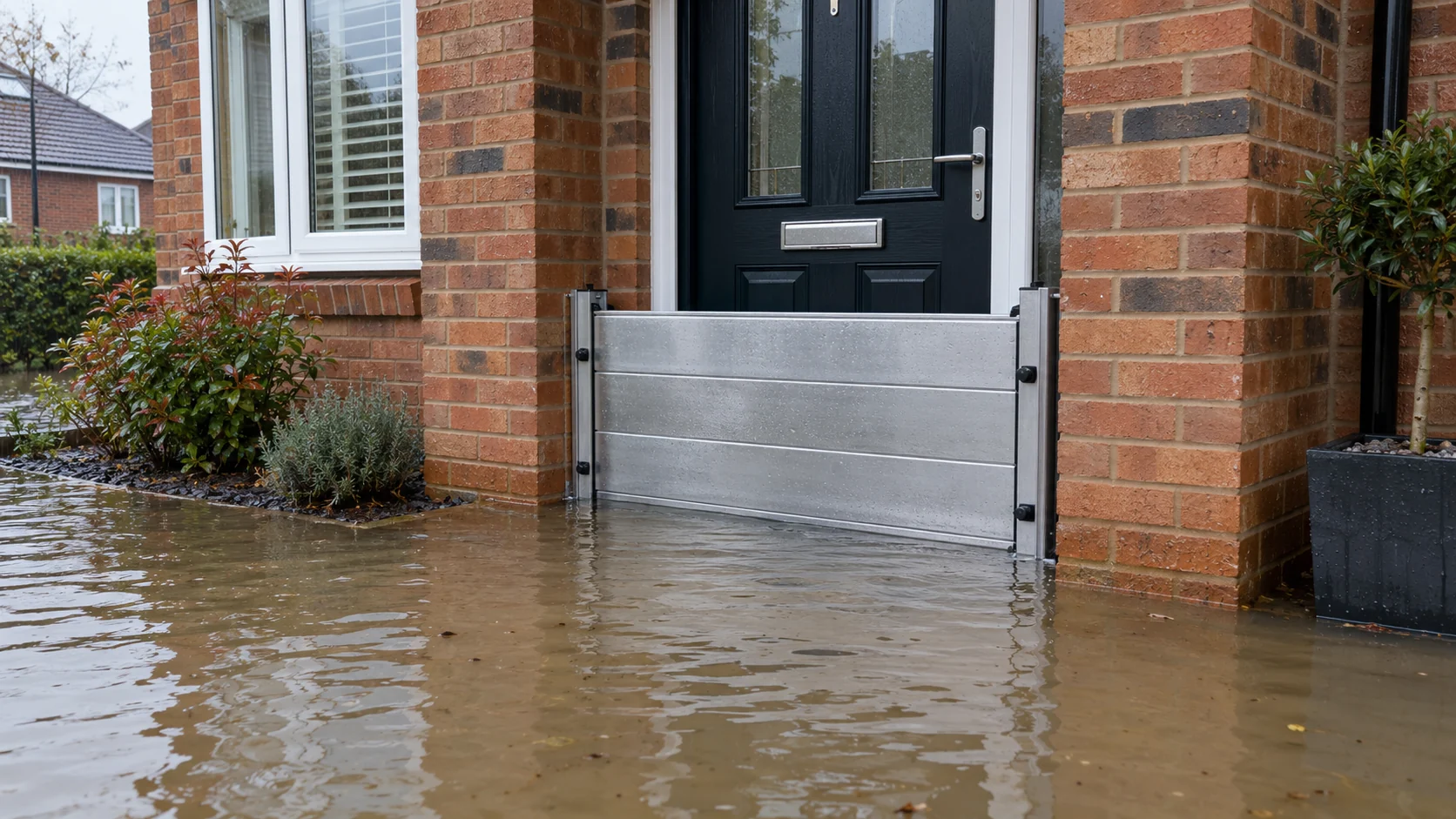
Start with the type of flooding
A doorway barrier may reduce relatively shallow water entry, provided the rest of the building has suitable details. Floodwater can still enter through vents, drains or adjoining walls.
The choice of barrier should follow an assessment of likely water levels and sources, not merely the height of the doorstep.
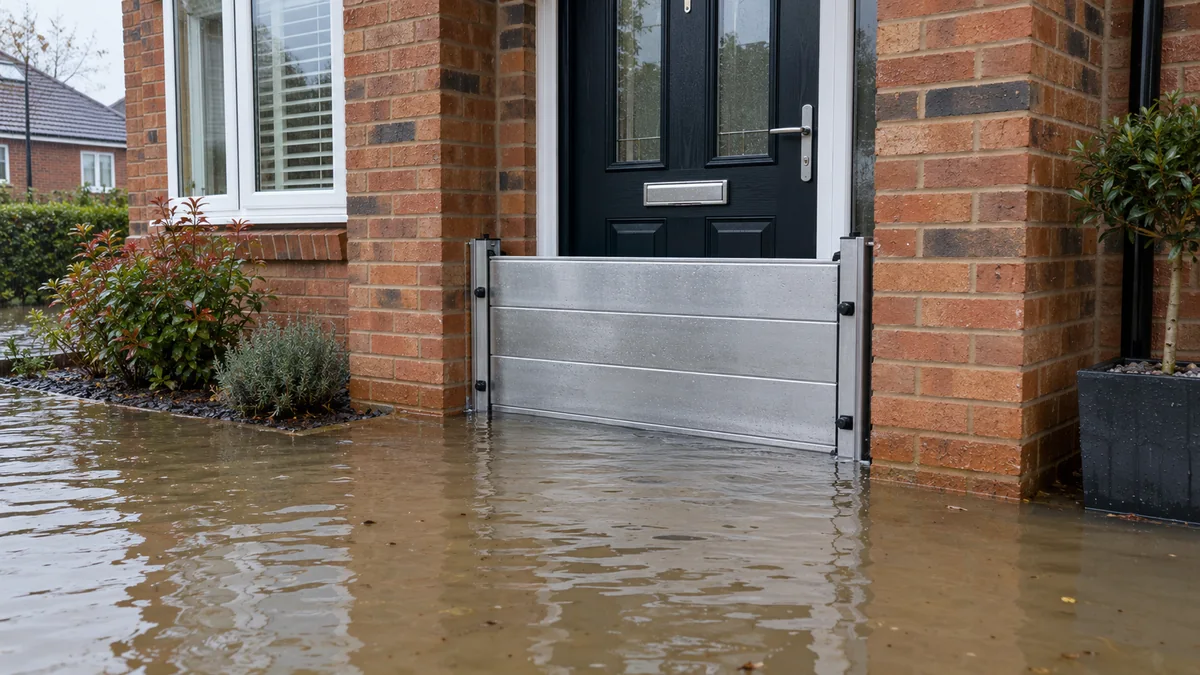
Removable or permanent?
Removable barriers need somewhere safe to store them and someone available to fit them in time. Permanent flood doors or integrated barriers have different cost, appearance and maintenance implications.
A system that requires heavy lifting may be unsuitable for some households. Think about what people can actually manage during a warning.
Installation details matter
Poorly fitted seals, uneven thresholds and gaps at the sides can undermine an otherwise good product. Installers should assess the surrounding masonry and fixings.
Ask how seals will be checked and replaced and what maintenance is needed over time.
Consider structural safety
Floodwater exerts pressure on walls and floors. Excluding deep water without proper design can be unsafe. Seek specialist advice about the flood depth and appropriate resistance strategy.
A product brochure should not be treated as proof that a particular building can resist all flooding.
Plan for an escape route
Protection should not trap occupants or obstruct an essential exit. Think about how doors will be used in an emergency and what happens if a barrier cannot be fitted in time.
Safety and a workable evacuation plan take priority over trying to keep a building completely dry.
Ask for a complete survey
Obtain a written survey covering door openings, airbricks, drainage backflow, service entry points and likely flood routes.
A good quotation explains both what the proposed barrier can do and its limitations.
Start with a survey of the whole building
A removable barrier only protects the opening it is designed for. Water may enter through airbricks, service penetrations, adjoining walls or a rear entrance at a lower level. The depth and duration of expected flooding matter, because trying to hold back deep water can impose loads the building was never intended to withstand.
Ask the supplier to explain why the proposed barrier height is appropriate and whether the building needs other measures in the same system.
Make sure the barrier can actually be used
A product stored in the garage is little use if nobody can fit it during an emergency. Check its weight, fitting method, seals and the space needed to install it. Consider whether someone with limited mobility could deploy it safely, and whether a warning is likely to arrive in time.
Practice installation in dry conditions and keep components labelled and accessible. Do not rely on a barrier as permission to remain in a dangerous property during severe flooding.
Installation and maintenance should be explicit
Poorly fixed channels, damaged seals and uneven thresholds can cause leaks even when the barrier itself is well made. A written quotation should include preparation to the opening, fixing details, any agreed testing and instructions for maintenance or replacement parts.
Ask about compatibility with the doors, drainage and any planned changes to paving levels. A good installation should not create a trip hazard or interfere with everyday escape routes.
Where simple barriers are the wrong answer
If water is likely to become deep or fast-moving, the priority is personal safety and compliance with official warnings. A barrier is not a guarantee of protection and should never encourage someone to remain in a dangerous building. For properties with frequent shallow surface runoff, changes to paving levels and drainage may reduce the load on a doorway barrier. For homes exposed to river flooding, a whole-property resilience assessment may be needed. If a supplier recommends a product after viewing only the front door, ask how water could reach the other sides of the house. Keep a copy of the installation instructions with the emergency plan and check that the fitting routine is realistic for everyone living there.
Official guidance and independent advice
Flooding can become dangerous quickly. Use official warnings and advice during an incident; this article is not a live risk assessment.
Prepare for flooding · Flood-proofing and recovery · National Flood Forum · Citizens Advice