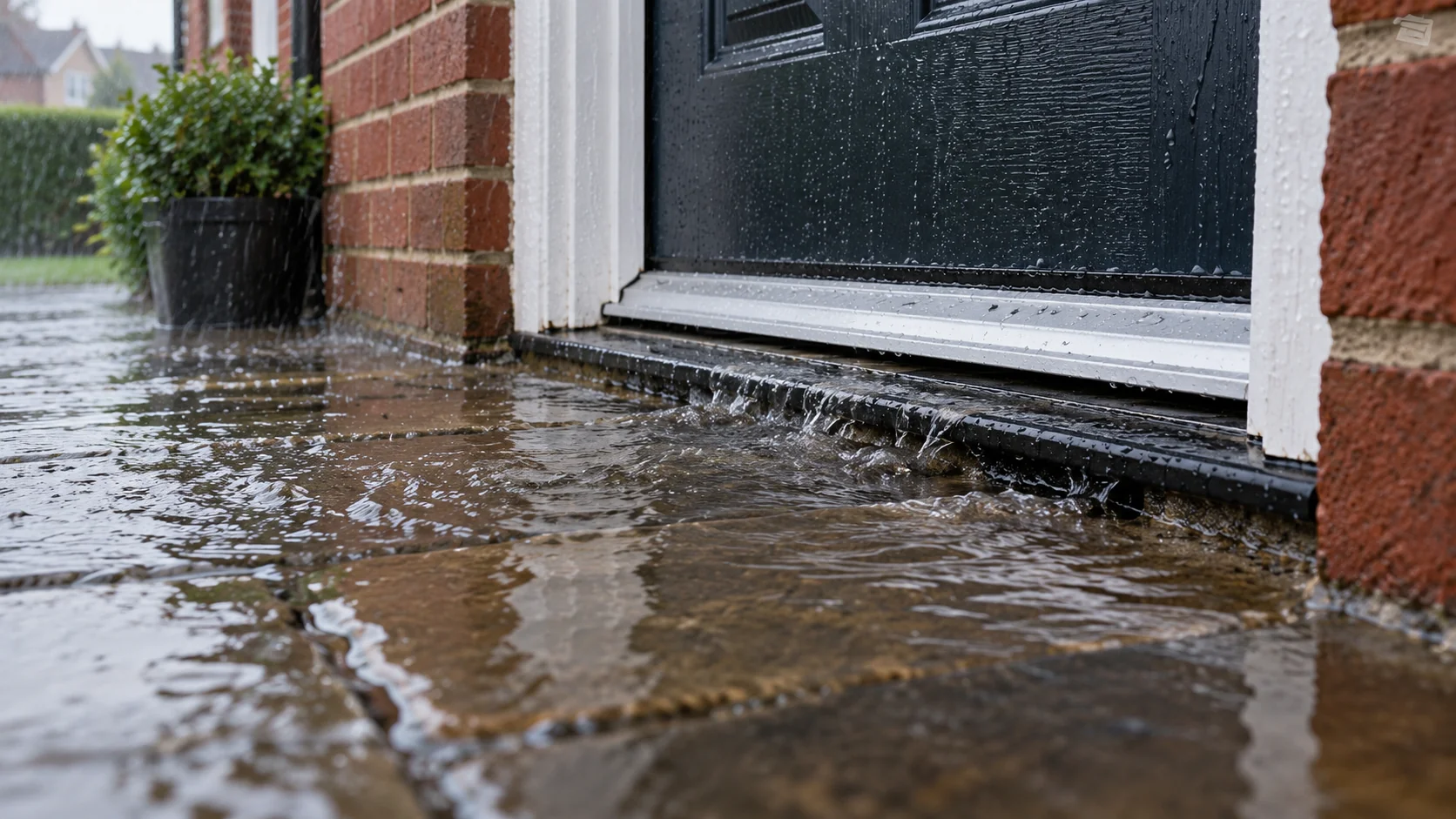
Look at the approach to the doorway
Water at the threshold can come from an unusually intense cloudburst, runoff from the road or a paved area that falls towards the house. Watch the direction of the flow from somewhere safe. A shallow sheet of moving water can build surprisingly quickly when the rain has nowhere to escape.
Check whether the problem begins at the road, the driveway or a blocked gully. A door seal may reduce splashing, but it cannot correct an entire paved area that directs water towards the entrance.
First identify whether water crosses the threshold from the outside or appears from beneath the internal floor. The timing matters. Water entering during a sudden downpour may be runoff from hard paving; water appearing long after rain may have a different route. Look at the external ground fall, any raised paving and whether neighbouring land directs water to your entrance. A replacement weather seal cannot compensate for paving that channels a sheet of rainwater towards the doorway. Photograph the route during rainfall only if it is safe to do so.
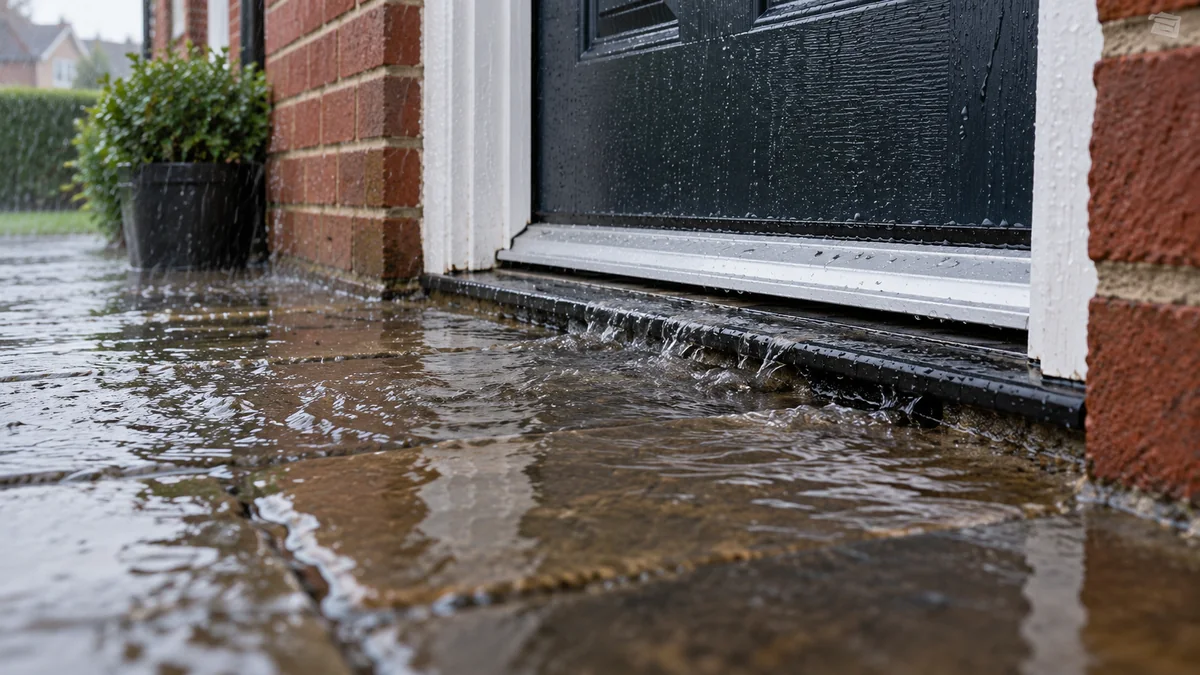
Keep people safe first
If water is actively entering, keep away from electrical equipment and contaminated floodwater. Do not enter standing water to investigate a drain cover or attempt to drive through floodwater. Contact the emergency services if anyone is in immediate danger.
When it is safe, take photographs from dry ground. Record how far water reached and which areas were affected, because this can help with an insurance claim and any later drainage investigation.
Door thresholds often have several interacting details: the door leaf, seal, drainage slots, external paving and the junction with the wall. A contractor proposing a new door should first show which detail has failed. Check whether a channel drain has a real, maintainable outlet. An interceptor that simply fills up may do little beyond holding water for a few minutes. If a door opening is part of an accessible route, changes to threshold height also need to be considered carefully.
Why a raised threshold may not solve it
Raising a threshold can reduce shallow runoff, but creates accessibility and weatherproofing questions. You should not obstruct a necessary escape route or create a trip hazard simply to hold back occasional rainwater.
The correct approach may combine revised paving falls, a correctly drained channel, a flood-resilient door arrangement and attention to adjoining walls. It depends on the actual source and expected depth.
Temporary barriers can help where flood depths and exposure are within their design limits, but they are not a reason to ignore water entering through airbricks or service penetrations. If you are considering a permanent barrier, ask for the predicted water level and the assumptions behind the proposal. In higher or prolonged flooding, trapping a large head of water against a wall may create structural risks. Flood protection should be considered across the whole building rather than the door in isolation.
Check the whole route of the water
Ask where the water will go after a proposed change. Sending it to the neighbouring property, into a foul sewer without permission or towards an airbrick is not a satisfactory fix.
An effective plan identifies safe discharge and considers what happens during a storm larger than the drainage was designed to handle.
When to involve a contractor
A builder or drainage specialist can assess paving falls, drainage channels, thresholds and wall details. If water is coming from a public highway or public sewer, the highway authority or sewerage company may also need to investigate.
Get a written explanation of the cause and any assumptions about drainage capacity before agreeing to expensive work.
Questions to ask about a quotation
Ask whether the proposal includes a suitable outfall, inspection and maintenance access, and how the proposed work affects the damp-proof course and ventilation. Ask what would happen if the outlet becomes blocked.
Keep the scope specific. A contractor who simply recommends a stronger door without investigating the water route may not have addressed the problem.
Official guidance and independent advice
Flooding can become dangerous quickly. Use official warnings and advice during an incident; this article is not a live risk assessment.
Prepare for flooding · Flood-proofing and recovery · National Flood Forum · Citizens Advice