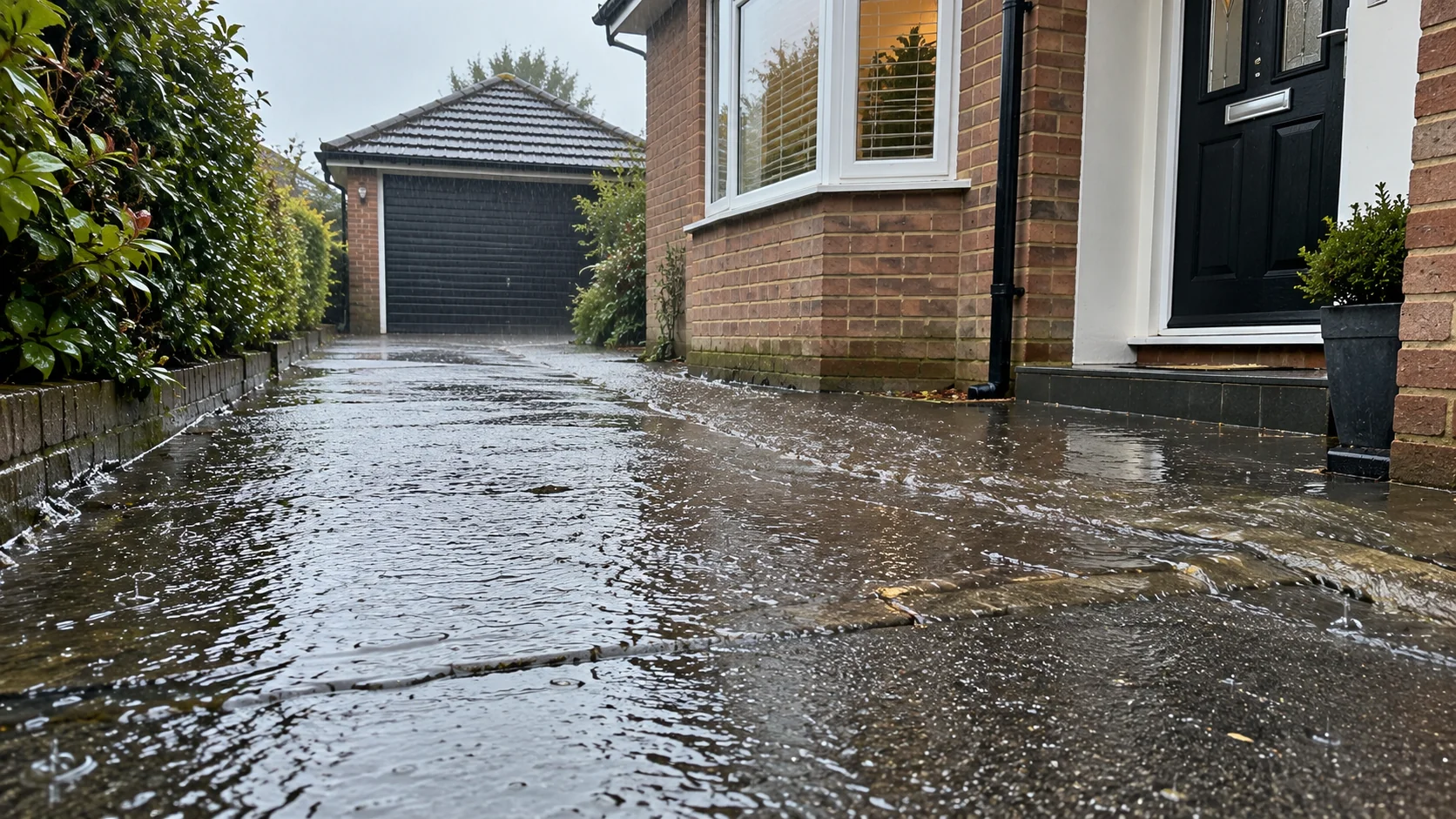
A clean grate does not prove the drain works
Homeowners often clear leaves from the grate only to find that water still rises above it. The channel may be full of grit, the outlet pipe may be blocked or the downstream drainage may already be surcharged during heavy rain.
Watch where the water first starts to pool. If it backs up from the outlet end, that is a useful clue, though it does not prove the precise fault.
Look at driveway levels
A linear drain can intercept runoff flowing towards a garage or doorway, but it cannot overcome a driveway that directs more water towards the house than the system was designed to manage.
After resurfacing, ground levels can be raised and falls altered. Check whether runoff from a neighbouring path, roof or road has also been added.
The water needs somewhere to go
The key question is where the outlet discharges. A soakaway may be saturated or unsuitable for the soil, while an underground pipe may be displaced or obstructed. It is not acceptable simply to connect the channel to any convenient drain.
A contractor should investigate the existing arrangement before proposing a new channel or larger grate.
What can safely be maintained
Where the manufacturer provides removable grates and silt traps, routine surface cleaning may help. Wear suitable protection and avoid opening flooded manholes or using powered equipment near water.
Repeated overflow despite cleaning warrants examination of the outlet rather than continued attempts to clear the same surface debris.
When to consider redesign
If the drain is undersized, poorly positioned or has no effective discharge route, a redesign may be necessary. Possible measures include better falls, additional interception and a suitable drainage destination, subject to permissions and local conditions.
The design should not transfer flooding to your neighbour or undermine adjoining structures.
Compare repair proposals
A sound quotation explains the defect, proposed capacity and discharge route, as well as how excavated paving will be reinstated. If there is an existing garage or house flooding problem, the contractor should show how the work addresses that risk.
Ask how the completed system will be checked before the driveway is handed back.
How to distinguish an outlet problem from poor falls
A channel can look clear and still fail when its outlet pipe is choked with silt. If water rises along the full length of the grate after rain begins, the receiving system may already be full. If runoff overtops one section immediately, the driveway may have an uneven fall or the grate may be too high to intercept the flow.
Where the paving has been resurfaced, examine whether the channel's relationship to the surrounding level has changed. Photographs from before the work, if available, can be helpful.
Questions before replacing the whole drain
Ask whether the contractor has checked the trap, outlet pipe and downstream connection. Cleaning a blocked outlet may be enough; replacing a sound channel is an unnecessary expense. If a new system is recommended, the quotation should identify its discharge destination and the amount of paving to be lifted.
A drain intended to prevent water entering a garage needs to intercept the full path of runoff, including water travelling around the ends. Treating only the most visible puddle may leave the problem unresolved.
Practical maintenance and warning signs
Clear leaves and sediment from accessible channels in accordance with the manufacturer's instructions, especially before autumn storms. Avoid lifting heavy grates or opening chambers while floodwater is present. Watch for recurring silting, subsiding paving or unpleasant smells, which may indicate another fault.
If the water contains sewage, stops other fixtures draining or affects public roads, establish whose drainage system is involved before paying for private excavation.
What to record before the visit
Photograph the drain during rainfall from a safe position, showing where the flow comes from and which end of the channel fills first. A plan marking downpipes, the garage threshold and nearby gullies will help. If the drain has a removable silt bucket, photograph its condition after the weather has passed. The point is to give the contractor evidence of how the system fails, not merely a picture of a puddle. Ask whether cleaning is included in the initial charge and whether further investigation will be agreed before excavation starts. Keep any old drainage drawings and receipts for resurfacing work, as these may explain changes to the route or volume of runoff.
Official guidance and independent advice
Flooding can become dangerous quickly. Use official warnings and advice during an incident; this article is not a live risk assessment.
Prepare for flooding · Flood-proofing and recovery · National Flood Forum · Citizens Advice