It depends on what became wet
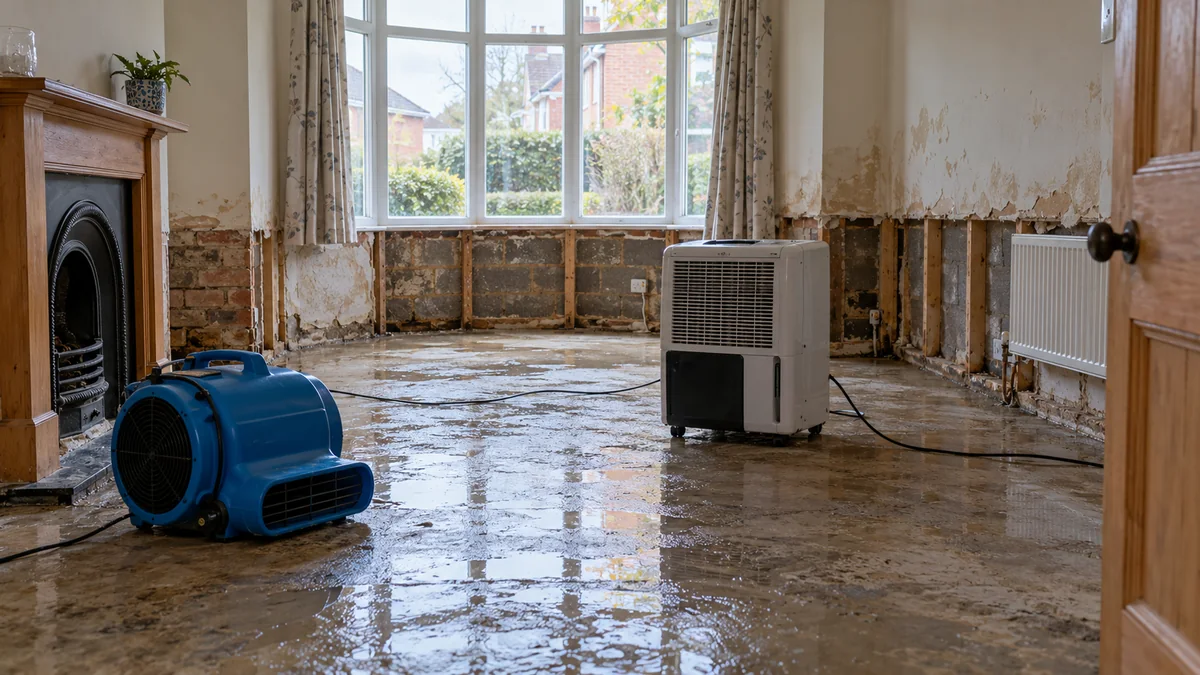
Solid masonry, plasterboard, insulation, suspended timber floors and concrete all behave differently. A shallow brief flood can affect a house differently from water that remains for days.
Why the surface can mislead
A wall may feel dry while moisture remains deeper within it. Covering damp materials with new finishes can trap moisture and delay recovery.
Controlled drying
Ventilation, heating and dehumidification may form part of a planned programme once the building is safe and contamination has been dealt with. Professional monitoring helps avoid guesswork.
What about plaster?
Some finishes can be retained after appropriate assessment; others may have to be removed due to contamination, damage or trapped water. Decisions should be based on condition, not a fixed height on every wall.
Do not redecorate early
Before reinstatement, ask for appropriate moisture assessment of the affected construction. A single electrical moisture meter reading cannot establish the condition of every material.
Insurance and records
Keep drying logs and records of work where possible. If your insurer is managing the claim, agree the drying and reinstatement specification before appointing separate contractors.
Why drying times vary so much
A solid brick wall, timber floor, plasterboard lining and insulated cavity will not all dry at the same speed. Flood depth and duration matter, as do water contamination, the weather and what has been trapped behind cabinets and skirtings. A heated room can feel comfortable while concealed materials remain wet. That is why promises that every flooded house will dry in a fixed number of days should be treated cautiously.
Ask for an actual drying record
Professional drying often involves controlled ventilation, dehumidification and regular checks, but equipment must be used safely and matched to the building. Ask which areas have been measured, where access openings were needed and how the contractor decided that rebuilding could begin. Do not cover damp walls with impermeable finishes or refit a kitchen over wet construction. Where historic solid walls are involved, recovery choices should reflect their moisture behaviour rather than importing details intended for modern cavity walls.
Reliable further information
For current warnings, official flood-risk maps and safety advice, use the relevant government service. This website cannot assess live conditions at your home.
Government flood guidance · National Flood Forum · Citizens Advice