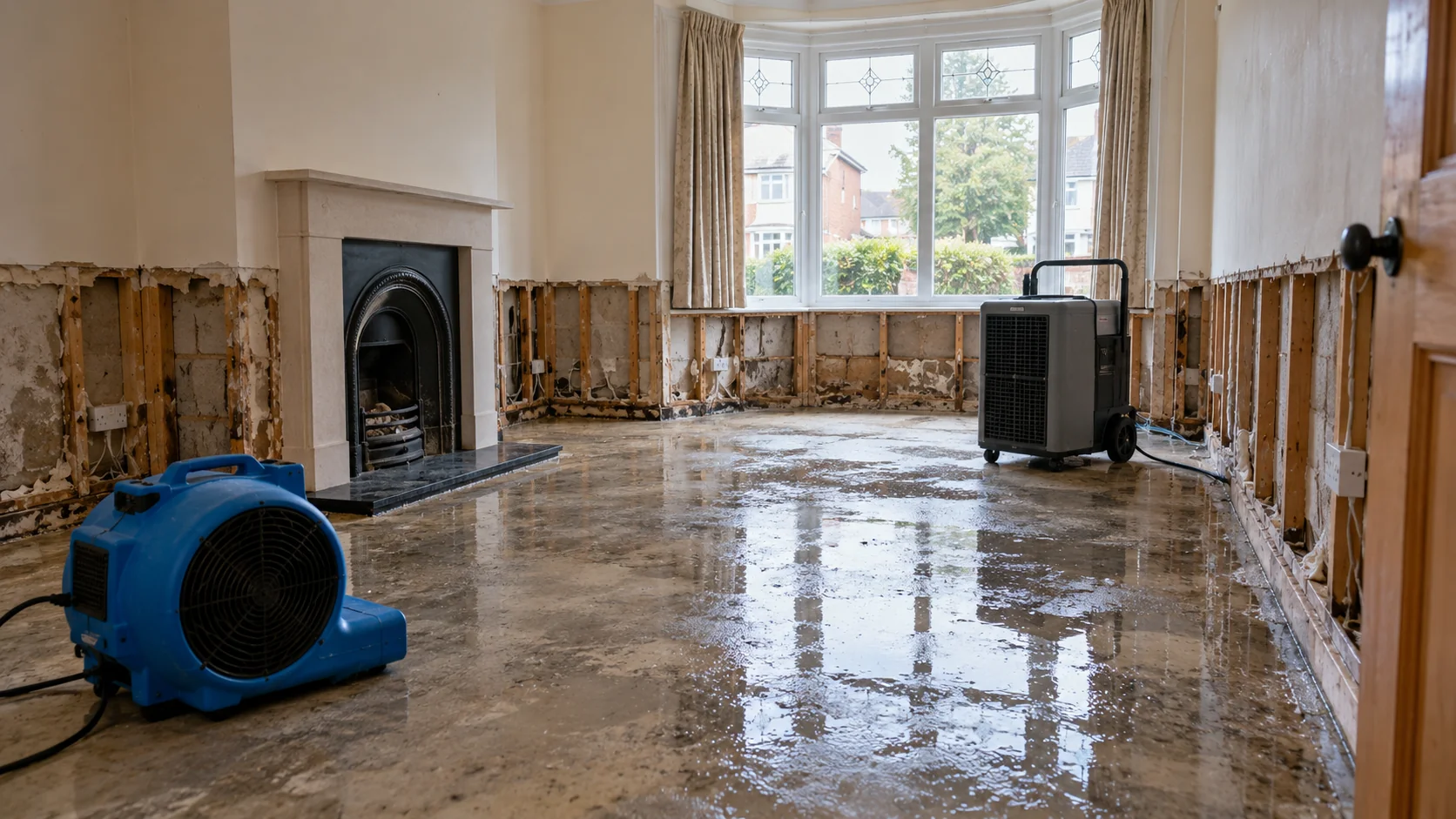
The type of flood matters
Clean-water leakage and river or sewage flooding create different risks. Floodwater can carry salts and contamination into wall finishes.
Floodwater may leave a distinct tide mark, but that mark does not tell you whether all the plaster below it must come off. Consider the age and type of wall, whether the floodwater was contaminated and whether plaster sounds hollow or has lost adhesion. Gypsum-based finishes, lime plaster and modern dry lining behave differently. On older solid walls, choosing a highly impermeable replacement finish can cause unwanted moisture retention. A survey needs to distinguish damage from an unsuitable existing detail.
Plasterboard versus solid plaster
Plasterboard can lose strength and hold contaminated water in cavities. Traditional lime or other solid plaster may respond differently, depending on its condition and the substrate.
Before removal, photograph the affected areas and liaise with the insurer where a claim is likely. If plaster is to be stripped, ask the contractor to identify how high and why. An arbitrary cutting height may be convenient, but the correct scope depends on contamination, salt deposits and the construction. Concealed insulation and electrical accessories need checking as well. Dust and potentially contaminated debris should be handled appropriately; this is not simply a cosmetic redecorating job.
Check beyond the visible mark
Water can rise into absorbent materials or run behind skirtings and dry linings. An investigation may reveal damp beyond the obvious stain.
The wall should be allowed to dry and assessed before new finishes are applied. A coat of stain-blocking paint may hide marks temporarily without dealing with trapped moisture. Ask what materials are proposed for the reinstatement and whether they are compatible with the building. If flooding is likely to recur, repair choices can focus on easier cleaning and replacement, rather than attempting to seal the wall completely.
Why stripping everything is not always sensible
Unnecessary removal adds cost, waste and disruption. But retaining a damaged or contaminated finish can also cause problems. The choice needs evidence.
Before a decorator arrives
Structural damage, residual moisture, salts and mould need addressing before applying new finishes. The best paint will not correct an underlying moisture problem.
Getting the work specified
Ask who has decided which materials to remove, what drying standards apply and whether insulation, electrics and concealed cavities have been considered.
Where the wall was wet, and for how long
A shallow, short-lived flood and a room that stood in dirty water for several days are not comparable. Note the water depth, how long it remained, whether sewage was suspected and where finishes sound hollow or have detached. Photograph a ruler against the tide mark. The damaged area can extend above the visible line, especially behind skirting and kitchen units. If you are claiming on insurance, agree any opening-up and disposal with the insurer except where urgent safety work cannot be delayed.
What is behind the plaster?
On a modern cavity wall the plasterboard, adhesive dabs and insulation may all have been exposed. With an older solid wall, lime-based plaster and masonry can behave quite differently. An experienced surveyor should identify the construction instead of specifying an identical waterproof coating for every room. In particular, sealing an older wall too soon can restrict drying and leave salts or moisture affecting a newly decorated surface.
A sensible sequence for plaster repairs
First make the building safe, control the source of water and clean any contamination. Then inspect the wall build-up, record moisture trends and decide which areas genuinely need removal. New plaster or plasterboard should not conceal damp wall bases or failed insulation. Ask whether the quotation covers skirting removal, electrical inspection, making good around sockets and reinstating suitable ventilation. A decorator cannot safely certify that concealed building fabric is dry.
When the wall still feels damp
Check whether rain is still reaching the outside wall or whether plumbing and drainage leaks could be continuing. Efflorescence and staining do not necessarily mean the latest repair has failed, but fresh patches that track rainfall warrant another inspection. Keep a record of dates and weather rather than repeatedly applying stain blocker. If there is significant cracking, bulging or movement, arrange a structural assessment before relying on cosmetic repairs.
Reliable further information
For current warnings, official flood-risk maps and safety advice, use the relevant government service. This website cannot assess live conditions at your home.
Government flood guidance · National Flood Forum · Citizens Advice