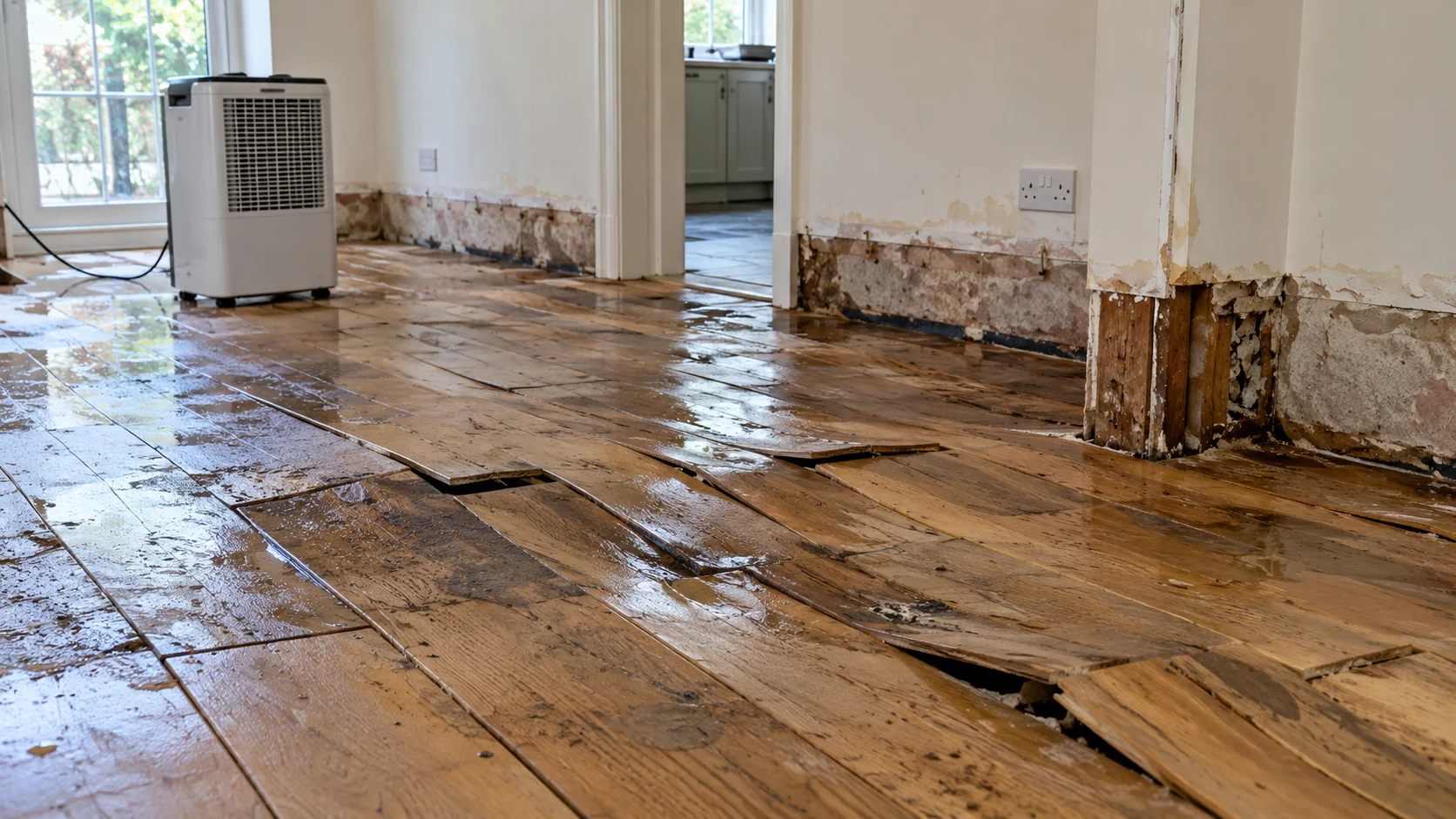
What type of floor do you have?
Solid timber boards, engineered wood, laminate and suspended timber joists all respond differently to immersion. Swelling or cupping may be obvious, while damp beneath remains hidden.
Subfloor concerns
In a suspended floor, water may collect below boards and affect joists or supporting timbers. Air bricks and ventilation must be assessed without simply blocking them.
Laminate and engineered finishes
Composite layers may swell or delaminate after prolonged wetting. Replacement may be more realistic than repair, but inspect the substrate first.
Do not seal moisture in
New vinyl, impermeable underlay or floor coverings laid before the structure is dry can conceal ongoing damp and deterioration.
Look for movement
If the floor becomes spongy, uneven or noticeably distorted, obtain a competent inspection before putting heavy furniture back.
Before choosing new flooring
Agree the investigation, drying verification, subfloor repairs and suitable replacement materials. Flood-resilient finishes may be worth considering where future flooding is possible.
Different floor types fail in different ways
Solid timber boards, engineered flooring and laminate do not respond equally to flooding. Boards may cup, lift or separate, while composite layers and adhesives may deteriorate. A visibly wet floor is not proof that every board must be replaced, but contamination, hidden moisture and the condition of the subfloor can make salvage impractical. Document the condition before stripping the finish if an insurance claim is involved.
Do not rebuild over a wet subfloor
The supporting construction is often more important than the visible finish. Where a suspended floor has flooded, the joists and void need checking. Where a finish sits on a solid slab, trapped moisture may prevent adhesive or new coverings performing properly. Ask how moisture conditions have been monitored and why the floor is considered ready for reinstatement. In a repeatedly flooded room, discuss whether a more recoverable finish would be suitable for the structure and how it will be maintained.
The underside can tell a different story
A floor may look almost normal while wet insulation, damp joist ends or moisture beneath boards continue to cause trouble. Conversely, temporary cupping of solid timber does not always mean every board is beyond repair. The type of subfloor matters: suspended timber, concrete screed and a floating floor each need a different drying and assessment method. Investigate the construction before accepting a quotation to lift and replace the visible finish.
Contamination changes the decision
Floodwater from a river or overwhelmed drainage system can contain sewage, oils and other contaminants. Carpets, underlays and some composite flooring materials can be impossible to clean adequately after contamination. Take photographs and obtain insurer instructions before disposal where practicable, but prioritise immediate health and electrical safety. Do not use ordinary household cleaning products as a substitute for a proper assessment of what needs removing.
What should a flooring contractor measure?
Ask how moisture will be assessed in both the floor covering and the construction below. On concrete, test methods and acceptable moisture limits depend on the new flooring and adhesive system; a hand-held meter alone is not a universal clearance certificate. For suspended floors, the state of joists, bearings, ventilation and wall bases can be just as important. Ensure the quote identifies who is responsible for verifying readiness before any new floor goes down.
Choosing replacement materials
In a house that has flooded repeatedly, floor tiles or other more recoverable finishes may reduce future strip-out, but grout, adhesives and the subfloor must still be chosen correctly. Avoid assuming that a waterproof top layer makes the whole floor floodproof. Thresholds, skirting, movement joints and concealed services still need attention. Compare the whole installed specification, not just the price per square metre of the finish.
What to ask before approving replacement
Ask whether the price includes removing and disposing of damaged boards, checking the subfloor, repairing skirting, making good thresholds and protecting adjoining rooms. If the floor was installed recently, retain any product specifications and fitting records. An insurer may require evidence that the underlying construction is sufficiently dry before approving a replacement. If only part of a room is affected, consider whether a patch repair can be matched in colour and level, and get that limitation explained in writing.
Reliable further information
For current warnings, official flood-risk maps and safety advice, use the relevant government service. This website cannot assess live conditions at your home.
Government flood guidance · National Flood Forum · Citizens Advice