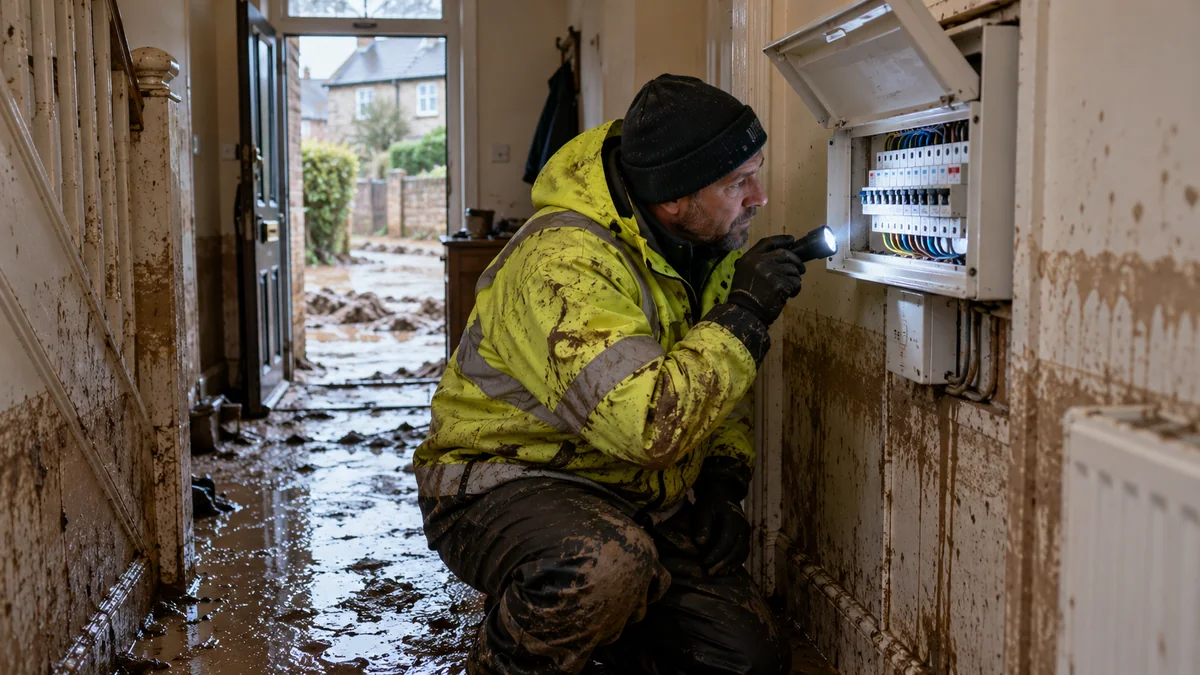
Water and electricity are a dangerous combination
Floodwater may enter sockets, cables, distribution boards, appliances and hidden connections. Even after drying, contamination and corrosion can undermine safety.
Do not try the switches
Do not operate electrical switches or appliances in wet areas. If equipment has been submerged, leave it isolated until a competent electrician or the relevant utility has assessed it.
What the inspection may involve
An electrician may need to inspect and test circuits, accessories and the consumer unit. Some equipment will need replacing rather than merely drying.
Think about future floods
Where appropriate, repositioning sockets and vulnerable equipment above expected flood levels can make recovery easier. Any alterations must comply with current electrical requirements.
Check other services
Gas boilers, heating controls and water supplies may also be affected. Arrange the appropriate specialist inspections rather than relying solely on an electrical check.
Before paying for repairs
If the damage is insured, agree the scope of inspection and replacement with the insurer. Keep written test results and certification.
Do not test flooded circuits yourself
If sockets, wiring, appliances or the consumer unit have been exposed to floodwater, keep clear and do not operate switches or attempt to restore supply yourself. Even water that appears clean can leave contamination and conductive deposits. A competent electrician needs to identify affected circuits and equipment and assess them before energisation. If floodwater is still present or the supply position is unsafe, follow the electricity network operator’s emergency advice.
What a safe reinstatement includes
An electrician may need to open accessories, inspect connections and test wiring; some components will need replacement rather than drying. Ask for details of what was tested and what remains isolated. The lowest affected socket is not necessarily the only problem, because water may have travelled through service routes or floor spaces. If the building has flooded repeatedly, discuss whether vulnerable electrical accessories can be positioned higher during reinstatement, while ensuring alterations comply with applicable electrical requirements.
Reliable further information
For current warnings, official flood-risk maps and safety advice, use the relevant government service. This website cannot assess live conditions at your home.
Government flood guidance · National Flood Forum · Citizens Advice