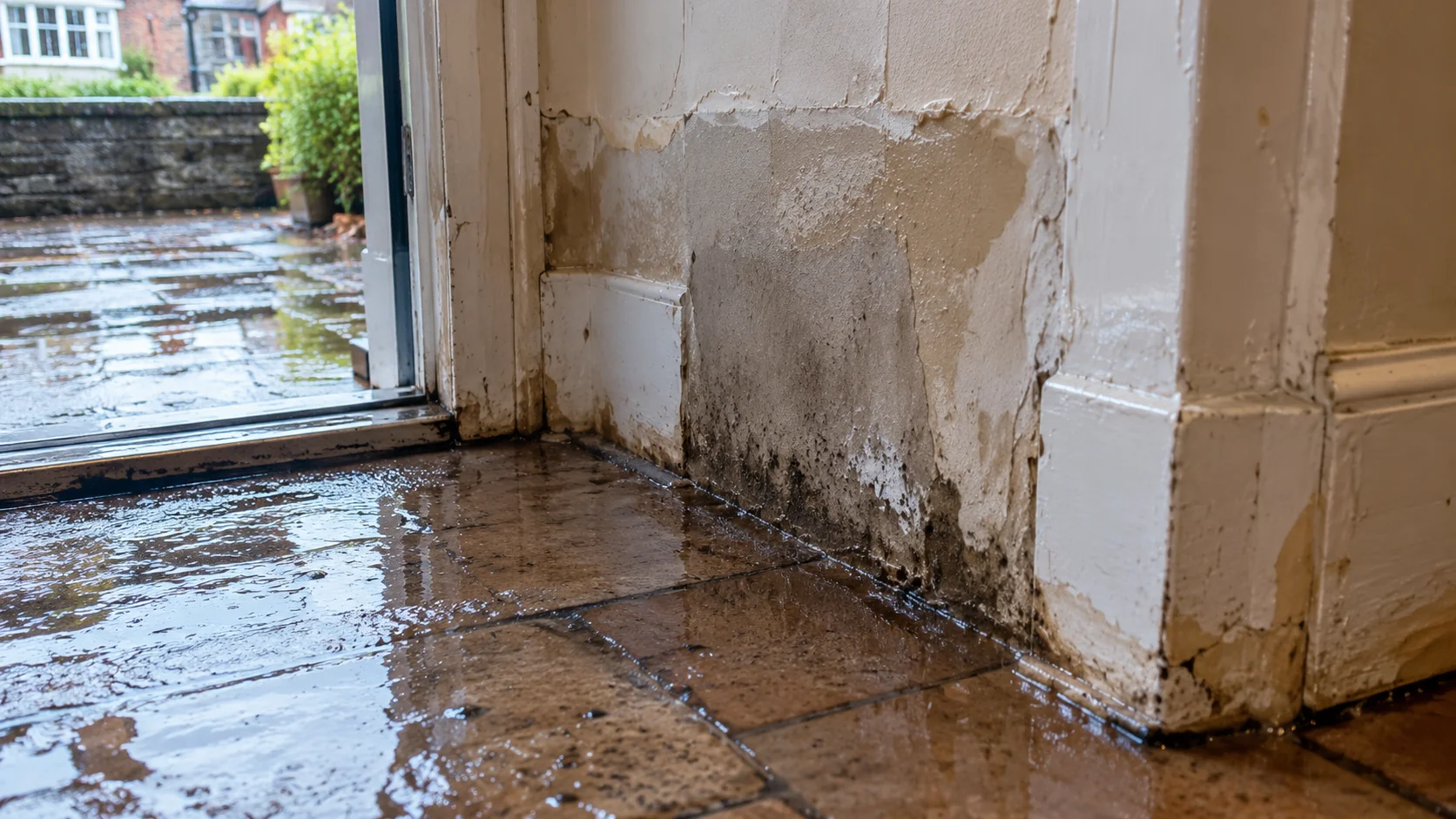
Look beyond the paintwork
After flooding, the lowest part of a wall often looks worst. Paint may blister, timber skirting may swell and gaps can open along the floor. It is tempting to remove every board immediately, but visible damage is only one part of the decision. First establish whether the material is solid timber, MDF or another composite.
Composite boards can lose their shape after prolonged wetting, while some solid timber can be dried and repaired. Contaminated floodwater can change the decision entirely.
Check the wall behind the boards
Water can remain behind skirtings and in gaps between plaster and the floor. Repainting before the wall has dried can leave stains, mould or peeling paint returning. A surveyor or suitably experienced contractor may recommend targeted removal to inspect the wall base rather than wholesale stripping.
Check whether low-level plaster, insulation, electrical cables or sockets have also been affected. Electrical installations exposed to floodwater require competent inspection before being used.
Cleaning and drying come before finishing
Floodwater may contain sewage or other contamination, even where it looks clear. Follow appropriate cleaning guidance and involve the insurer before disposing of damaged items if a claim is likely. Drying should be monitored rather than decided by an arbitrary number of days.
A moisture meter can help track change, but results must be interpreted alongside the wall construction and flood history.
When replacement makes sense
A distorted MDF skirting board may be beyond economical repair. Sound timber with limited staining, on the other hand, may be reusable after cleaning and drying. The decision should take account of labour as well as materials, especially if boards need to be removed to inspect concealed damage.
Where a home has flooded more than once, consider whether a more water-tolerant detail would make future cleaning easier.
Be careful with older walls
Solid-wall and older buildings often need a different approach from modern cavity-wall construction. Impermeable coatings and inappropriate materials can hold moisture where the building previously dried naturally.
Before specifying replacement plaster or sealing products, ask the person doing the work to explain how the wall will dry.
A sensible specification
A clear quotation should state which boards are being removed, whether the wall base will be checked, how contaminated materials are handled and what evidence confirms the area is dry enough to redecorate.
That is a more dependable approach than a quick estimate to replace skirtings and paint over the tide mark.
Do not confuse swollen paint with sound joinery
A painted solid-timber skirting can look dreadful because the finish has blistered, yet the timber underneath may remain serviceable. MDF or chipboard-based mouldings often swell at the lower edge and do not return to their original shape. Inspect a discreet section and check corners, mitres and fixings rather than relying on appearance from across the room. A wet board also tells you little about the condition of the wall behind it.
Why the floor junction is vulnerable
Floodwater settles in the joint between floor and wall, where dirt, salts and organic debris can accumulate. It can remain behind fitted furniture and at the bottom of dry lining. The skirting may need careful removal to inspect this concealed area, particularly after sewage contamination. Ask whether the specification allows for cleaning the wall base and checking the floor edge; simply pinning a new board in place may hide the dampest part.
What reinstatement should include
A proper job may require numbering and saving reusable lengths, replacing distorted sections, repairing plaster, preparing a suitable fixing surface and allowing sufficient time before final painting. On a repeatedly flooded ground floor, talk through whether the skirting detail could be easier to remove and clean next time. This need not mean using inappropriate plastic trims everywhere: the room construction and future maintenance should guide the choice.
Getting useful quotes
Request an itemised price for removal, inspection, any treatment of contaminated material, replacement mouldings, decorating and disposal. Establish whether existing architraves and door linings are included, because matching joinery can substantially affect cost. Ask what evidence will be used to decide the wall is ready for redecoration. Where an insurer is paying, have the reinstatement schedule agreed before changing the materials or design.
Official guidance and independent advice
Flooding can become dangerous quickly. Use official warnings and advice during an incident; this article is not a live risk assessment.
Prepare for flooding · Flood-proofing and recovery · National Flood Forum · Citizens Advice