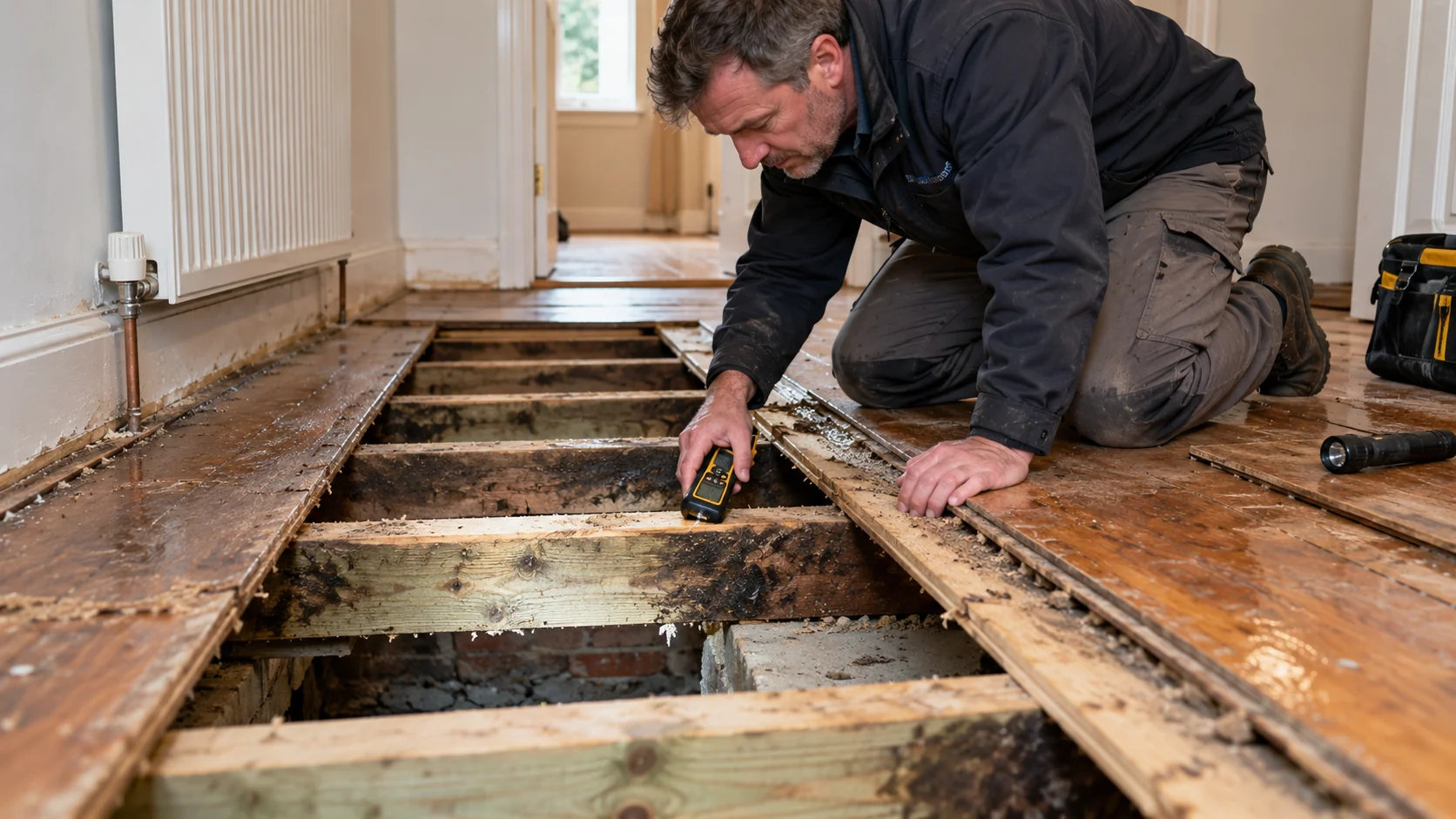
Flooding and decay are not the same thing
A timber joist can become wet during a flood without losing its strength immediately. Decay is associated with sufficiently prolonged damp conditions and other factors. The question is therefore how long the timber has remained wet, whether contamination is present and whether the floor was already defective.
It is misleading either to declare every wet joist rotten or to assume that drying alone solves every problem.
A wet timber joist is not necessarily a rotten one. Decay depends on prolonged moisture and the wider conditions within the void. That is why a competent assessment looks beyond a damp surface and pays attention to joist ends built into masonry, any existing splits and the support provided by sleeper walls. Ask for photographs of the inspected locations. If boards or ceilings are being removed, the inspection should be planned so that the structure is not weakened or left unsafe in the process.
Where inspection matters most
Joist ends built into masonry, connections around sleeper walls and concealed corners are often the places where problems can be missed. A floor may appear level and secure while damp remains trapped at these details.
Inspection may require selective lifting of boards. This work should only proceed after electrical and structural hazards have been considered.
Moisture meter readings help establish patterns, but they should never be presented as proof of decay by themselves. Different timber species and treatments may affect readings, and the most vulnerable areas can remain hidden. In some cases a surveyor or structural engineer will need to establish whether a joist has actually lost section or bearing capacity. A well-supported report will identify specific members, their locations and the evidence for repair, rather than describing the whole floor as beyond salvage.
Moisture measurements are evidence, not a verdict
Timber moisture readings can assist an investigation, especially when repeated over time. A single number cannot show the condition of hidden bearings or establish the type and extent of any fungal decay.
A useful report records construction, visible defects, areas opened up and the reasoning behind any recommendation to replace timber.
Before agreeing to replace joists, obtain a clear specification for temporary support, removal, treatment of the cause, and reinstatement. If the void has taken in contaminated water, cleaning may need to precede drying. Avoid proposals that permanently block the ventilation openings without providing a suitable alternative. Once work is complete, keep survey records and photographs: they can help explain to future purchasers what was repaired and why.
Ventilation and cleaning
Floodwater may carry contaminants into the subfloor void. Safe cleaning and drying may need specialist equipment and a controlled approach. Blocking airbricks in an attempt to keep future floodwater out can also deprive a suspended floor of ventilation.
Flood-protection products should be specified as part of a whole-building plan rather than installed in isolation.
When structural repairs may be necessary
Joists with substantial loss of section, failed bearings or serious pre-existing decay may need repair or replacement. In some cases a local splice or strengthening detail is appropriate; in others, wider work is justified.
If there is significant sagging, movement or an unsafe floor, keep the area out of use until a competent person has assessed it.
What the quotation should contain
Ask which joists are affected, how the contractor established that, how the supports will be dealt with and what drying and ventilation measures are included. The finish to the floor is the last part of the job, not the first.
Make sure any insurer or loss adjuster agrees the scope before major reinstatement begins.
Watch for signs that call for a closer structural assessment
A floor that has developed significant sagging, new movement or local loss of support needs prompt professional attention. Be cautious about contractors attributing every crack or movement to the recent flood without examining previous repairs and the way the floor is supported. A report should identify which joists and bearings are affected, not simply recommend replacing the entire floor because it has been wet.
Official guidance and independent advice
Flooding can become dangerous quickly. Use official warnings and advice during an incident; this article is not a live risk assessment.
Prepare for flooding · Flood-proofing and recovery · National Flood Forum · Citizens Advice