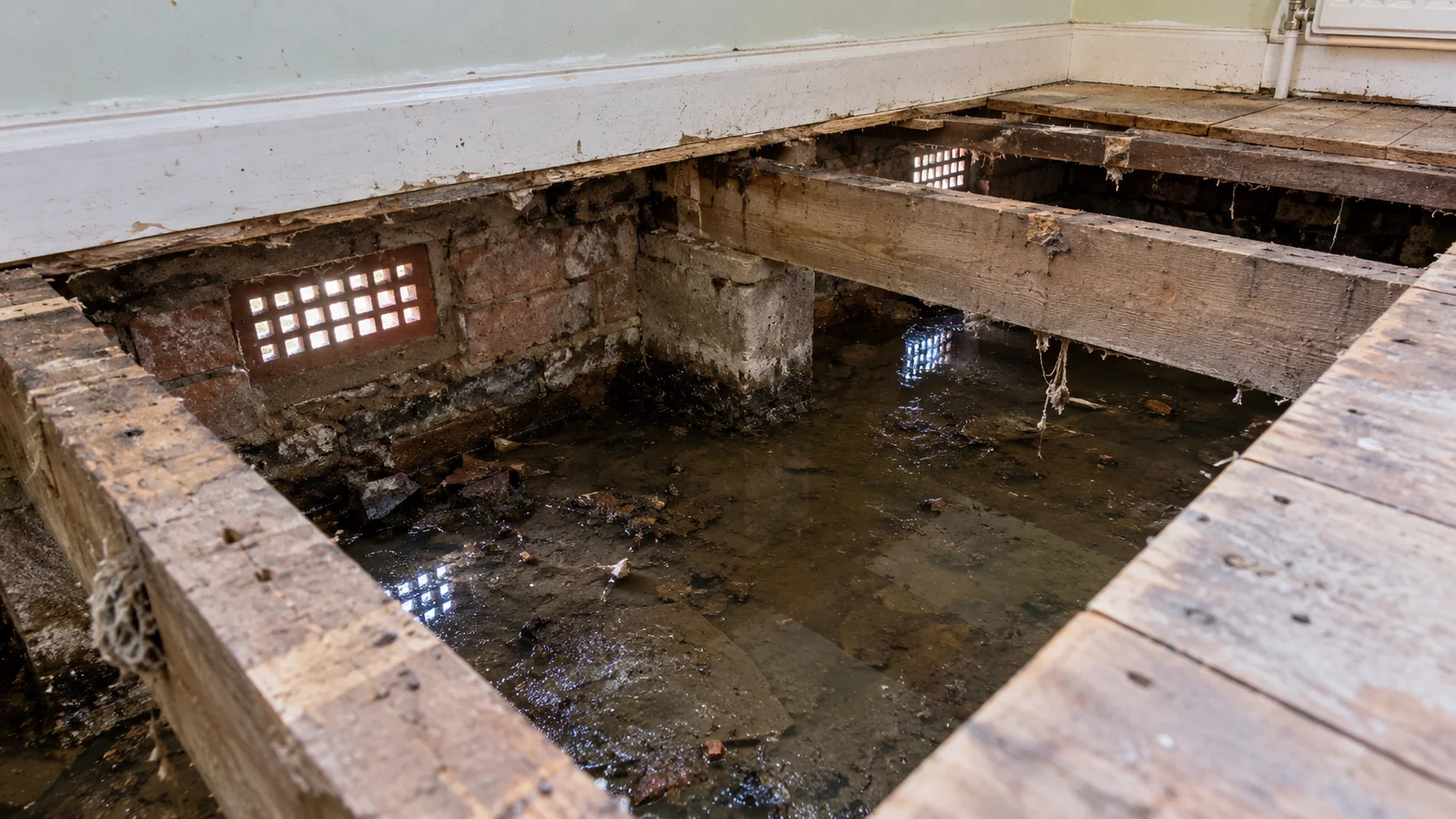
Do not lift boards while water is present
Water beneath a suspended timber floor may bring sewage, sharp objects, damaged wiring and unstable ground. The underside of the floor may be difficult to inspect safely.
Keep people out of affected areas until the immediate flood risk and electrical hazards have been assessed.
Find out where the water entered
Entry routes include airbricks, subfloor drains, cracks, service penetrations and standing surface water around the walls. Water may also have travelled from another part of the property.
Drying the floor void without tackling a continuing source means the problem can return.
Timber may stay wet after the surface dries
Joist ends, floorboards and sleeper walls can hold moisture. A room can look dry while concealed timber remains damp, particularly if air movement beneath the floor is poor.
A competent inspection should consider timber condition and ventilation. A moisture-meter reading alone does not prove structural decay.
Why rushing to replace boards can backfire
The choice between drying, local repairs and wider replacement depends on contamination, timber damage and movement. Removing sound timber unnecessarily increases cost and disruption.
Equally, leaving badly affected materials in place can prolong the drying period and increase the risk of mould.
Keep insurers informed
If the incident may be insured, record the damage and consult the insurer before authorising major stripping-out work, except where urgent safety measures are necessary.
Keep receipts, photographs and survey findings, and clarify who approves each stage of reinstatement.
Specify the repair properly
A written scope should cover safe access, cleaning, drying targets, ventilation, timber inspection and making good.
For recurring events, consider flood-resilient choices rather than reinstating the same vulnerable arrangement without discussion.
Why the visible floor can give the wrong impression
Warm air circulating through the room will not necessarily reach the void below the boards. Moisture can remain at joist ends, sleeper walls and the ground surface long after the flooring feels dry to the touch. This can lead to lingering odours or movement in the finished floor, especially if the source of water is still active.
Keep an accurate record of where the water entered, how high it reached and whether it included foul drainage. Those details influence cleaning, access and drying decisions.
A controlled opening-up inspection
Access may require lifting selected boards or opening an existing hatch, but only after an assessment of electrical safety and structural condition. A competent contractor should record the condition of joists, bearings, ventilation routes and service pipes rather than relying on a moisture-meter reading at one accessible point.
Avoid sealing over underfloor vents as a quick flood prevention measure. A suspended timber floor still needs an appropriate ventilation strategy, and any flood-resilience system must account for that.
How the work should be handed over
A proper job description should say how water and debris will be removed, how contamination will be dealt with, what drying or monitoring is planned and which timbers genuinely require repair. It should also state who is responsible for reinstating boards and finishes once the underlying void is satisfactory.
Ask for photographs of concealed work before the floor is closed. Where the flooding might recur, discuss the route of entry rather than concentrating entirely on making the room look tidy again.
What to look for after the room is back in use
Even after a successful repair, it is worth paying attention to recurring odours, unexpected movement in the boards or damp marks at skirting level, particularly after rain. Those symptoms do not establish a particular defect, but they justify looking again at ventilation and water entry. Keep the records of what was opened, what was found and how the area was dried. If the floor is covered by laminate or fitted furniture, make sure future inspection access has not been lost unnecessarily. A small, carefully planned access point can avoid destructive opening-up if another incident occurs, although its location needs to suit the structure and finished floor.
Keep a record of the drying process
Before floorboards are put back, obtain a record of what was cleaned, what was removed and how moisture conditions were checked. Where the floodwater was contaminated, ask how that was addressed. Photographs of the open void, joist ends and ventilation routes can be useful if a smell or damp patch develops later, and may help an insurer or contractor distinguish fresh flooding from an unresolved drying problem.
Official guidance and independent advice
Flooding can become dangerous quickly. Use official warnings and advice during an incident; this article is not a live risk assessment.
Prepare for flooding · Flood-proofing and recovery · National Flood Forum · Citizens Advice