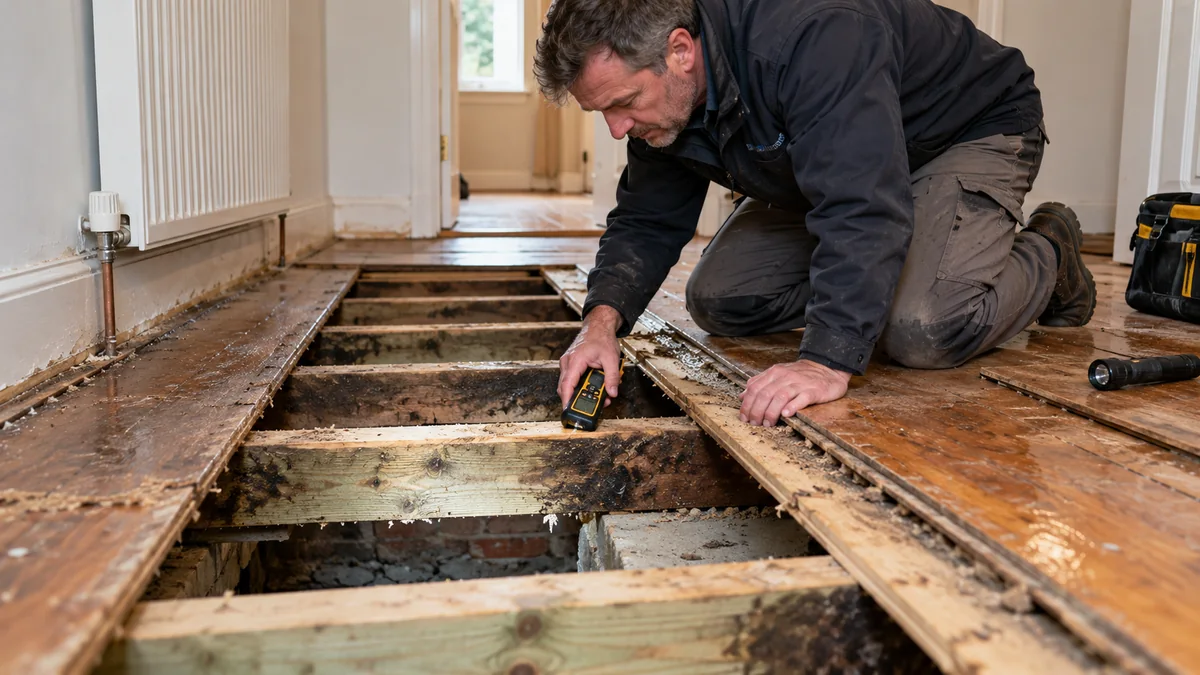
How water becomes trapped below floor level
In suspended timber floors, water may enter through airbricks, low wall openings, service penetrations or internal routes from elsewhere in the property. Once below the boards it can remain out of sight for much longer than people expect.
That is why the room above may appear to improve while the real drying problem is still below.
Surface drying can give false reassurance
Dry plaster surfaces and drier-looking boards do not prove the void is clear. If water remains below, humidity can stay high and timber, wall bases and finishes may continue to suffer.
Owners sometimes discover this only when a smell develops or boards start moving.
What should be checked in the void
The key checks include the water level, contamination, joist condition, sleeper walls, subfloor ventilation and whether debris is obstructing drainage or airflow.
A proper inspection also considers whether water is still entering after rain.
Cleaning, pumping and monitored drying
Where standing water is present, removal and cleaning may be needed before controlled drying can begin. The approach depends on contamination, access and the building layout.
Simply blasting warm air into the room above may do little for the hidden water below.
Services and wall bases may also be affected
Pipes, cables, wall linings and plaster bases near the floor can all be affected by prolonged wetting. That is another reason a floor void problem is rarely just about the boards.
The repair plan should consider the whole affected zone.
Do not close the floor too soon
If boards are reinstated before the void has properly recovered, trapped moisture and repeat smells can follow. The temptation to finish quickly is understandable, but premature closure often causes another round of disruption.
Ask what evidence shows the void is ready to be closed up.
A smell is a clue, not a diagnosis
After a flood, a musty smell below floor level may come from trapped debris, wet timber, damp masonry or contaminated silt. It does not by itself identify dry rot or another fungus. A competent inspection should trace the source and look at the condition of the materials before a specialist treatment is recommended. Repeated deodorising without inspection may merely disguise the problem.
Safe access matters
An underfloor void may contain exposed wiring, sewage, slippery supports, damaged boards and sharp debris. Do not enter a flooded crawl space or start pulling boards beside live electrical services. Appropriate tradespeople should plan any opening-up and take account of the floor’s structural support. Photographs obtained through an existing safe opening can sometimes establish whether more access is needed.
How water is removed
Standing water may require controlled pumping and removal of contaminated debris. An indiscriminate pump-out is not always sensible where surrounding ground or water levels remain high, and the discharge must go somewhere lawful and safe. Drying equipment then needs to address the void itself, not just the room above. Ask how air can circulate around joists and wall bearings and how progress will be checked.
Reinstatement and preventing a repeat
Where boards have been lifted, the contractor should assess joists, ventilation routes, insulation and floor finishes before closing the void. If water entered through airbricks, walls or drainage, tackle that route as part of a considered flood-resilience plan. Permanently blocking underfloor ventilation can create a different moisture problem. Keep notes on the remedial work and any checks required before the floor is reopened for normal use.
Avoid solving one problem by creating another
It can be tempting to block every airbrick or pour a waterproof compound into a damp floor void. Neither is a safe general remedy. A suspended timber floor ordinarily relies on ventilation and appropriate separation from damp ground. Any flood barrier or modification to a low-level opening should be assessed in relation to the entire building and the likely height and duration of floodwater. A repair proposal should explain how water will be managed without creating persistent condensation or trapping moisture in timber bearings.
Official guidance and independent advice
Flooding can become dangerous quickly. Use official warnings and advice during an incident; this article is not a live risk assessment.
Prepare for flooding · Flood-proofing and recovery · National Flood Forum · Citizens Advice