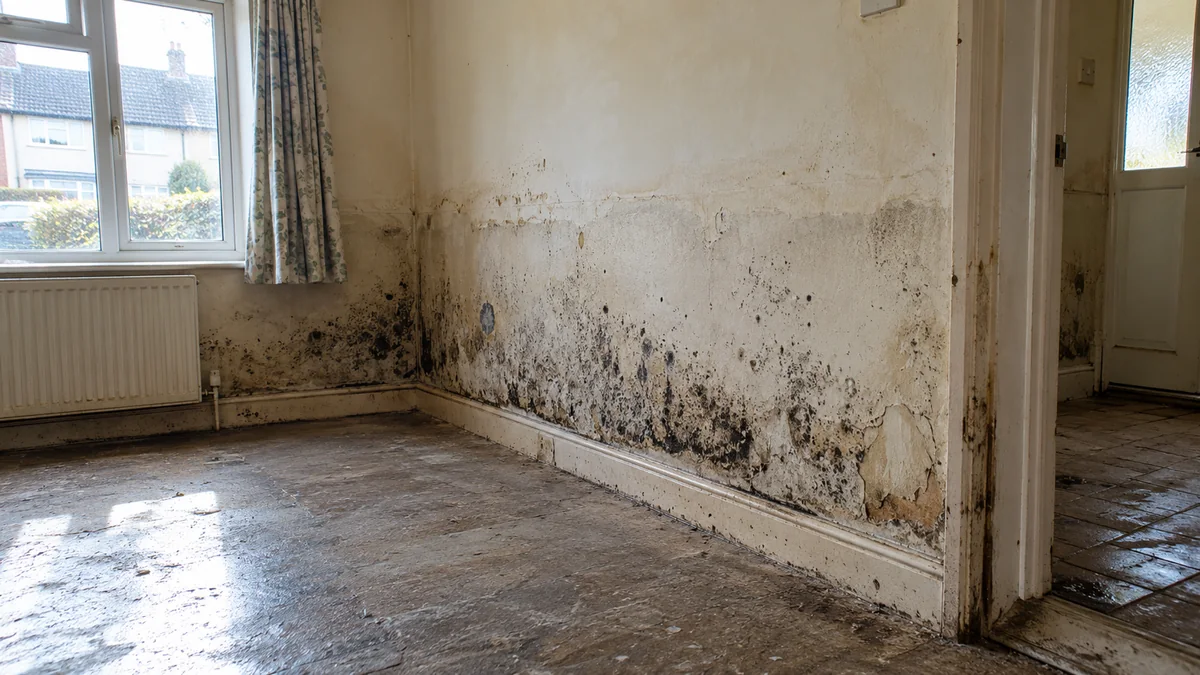
Why mould appears
Mould can grow where materials remain damp and there is enough organic material to support it. Wet plasterboard, wallpaper, wood and dust are all potential sources.
Do not just paint over it
Stain-blocking paint can hide marks temporarily, but it does not remove moisture or fix contaminated material. Investigate the original flood damage and drying.
Look in concealed areas
Moisture may remain behind skirtings, in floor voids, beneath fitted cupboards or behind lining boards. Persistent smells are worth investigating.
Cleaning versus removal
Small areas on sound, cleanable surfaces may be manageable with appropriate precautions. Porous or extensively contaminated materials may need specialist removal. Seek health advice where exposure is a concern.
Avoid excessive promises
A contractor should be able to explain what is causing the moisture and which materials are affected. A chemical spray alone is unlikely to solve an unresolved wet construction.
Put the drying first
Check the building is dry enough for reinstatement and ventilated appropriately. Where insurance is involved, coordinate the work with the agreed recovery plan.
Mould usually means moisture remains
Mould after a flood may develop on plaster, wallpaper, stored belongings or hidden surfaces. Cleaning a stain is unlikely to be a lasting answer if wall bases, floors or cavities are still wet. Floodwater may also have introduced contamination that requires specialist cleaning before ordinary redecoration. The priority is to establish where moisture remains and whether fresh water continues to enter.
Cleaning and rebuilding safely
Small surface growth and extensive contamination are not the same problem. Take care with disturbed mould, porous materials and rooms occupied by vulnerable people. Where plasterboard, insulation or composite boards have become badly contaminated, removal may be more appropriate than cosmetic treatment. Ask whether the wall or floor has been properly inspected and dried before fresh finishes are fitted. A contractor who offers only mould-resistant paint without addressing drying is not dealing with the cause.
Find the source before reaching for a spray
Visible mould is evidence that a surface has remained damp enough for growth, but the source is not always the same as the original flood. Moisture may be lingering within plaster, behind furniture or beneath flooring, or fresh rainwater may still be entering. Keep rooms ventilated when safe and follow the drying plan, but do not open contaminated cavities or disturb extensive mould growth without appropriate precautions. People with respiratory conditions may be especially vulnerable.
Why the pattern matters
Mould concentrated behind a fitted wardrobe can indicate restricted air movement, while a low band at the wall base after flooding suggests retained moisture or affected lining materials. A ceiling patch may instead come from a roof or plumbing defect. These are clues rather than diagnoses. Record where new patches appear and whether they change after rainfall or heating. A contractor should explain how the underlying cause was identified.
Cleaning has limits
A small area on a sound, cleanable hard surface may sometimes be dealt with using appropriate cleaning guidance. Porous materials that have been heavily contaminated or remain damp may require removal. Painting over mould does not remove a moisture source, and strong chemicals can create their own hazards when used incorrectly or mixed. Where growth is extensive, recurring or linked to sewage-contaminated water, use suitably experienced professionals.
Before closing up the room
Ask for drying records where relevant, checks on hidden materials, confirmation that any continuing leak has been remedied and details of how affected items were cleaned or removed. A musty smell after redecorating is a reason to investigate, not simply to add fragrance or another coat of paint. The quotation should state what happens if concealed deterioration is found when units or linings are opened.
Who should carry out the work?
A decorator may be able to make good a small, dry area once the cause is fixed, but extensive hidden growth or sewage-contaminated materials call for appropriate specialist assessment. Ask a prospective contractor what areas they will inspect, which materials they propose to remove, how dust and debris will be contained, and what evidence they need before decorating begins. Where occupants have significant respiratory symptoms, seek healthcare advice rather than continuing to disturb affected material yourself.
Reliable further information
For current warnings, official flood-risk maps and safety advice, use the relevant government service. This website cannot assess live conditions at your home.
Government flood guidance · National Flood Forum · Citizens Advice