What fast water can do
Flowing water may remove loose soil around exposed footings, retaining walls, paths and light structures. Persistent leaks can also soften some ground conditions.
Not every wet foundation moves
A single flood does not mean a house will subside. The effect depends on soil, foundation depth, water movement and the condition of the structure.
Signs worth checking
New cracking, settlement beside a wall, undermined paving, leaning retaining walls or suddenly uneven floors are reasons to seek a proper inspection.
Look at drainage damage
Displaced or fractured drains may release water near a foundation. Identifying and fixing the leak may be essential before deciding whether building work is needed.
When to call an engineer
Where there is significant erosion, new structural movement or a suspect retaining wall, obtain advice from a structural engineer. Do not enter or excavate an unstable area.
Avoid premature underpinning
Repair design should follow investigation of the cause, ground and foundations. Underpinning is not an automatic response to damp soil or a few cracks.
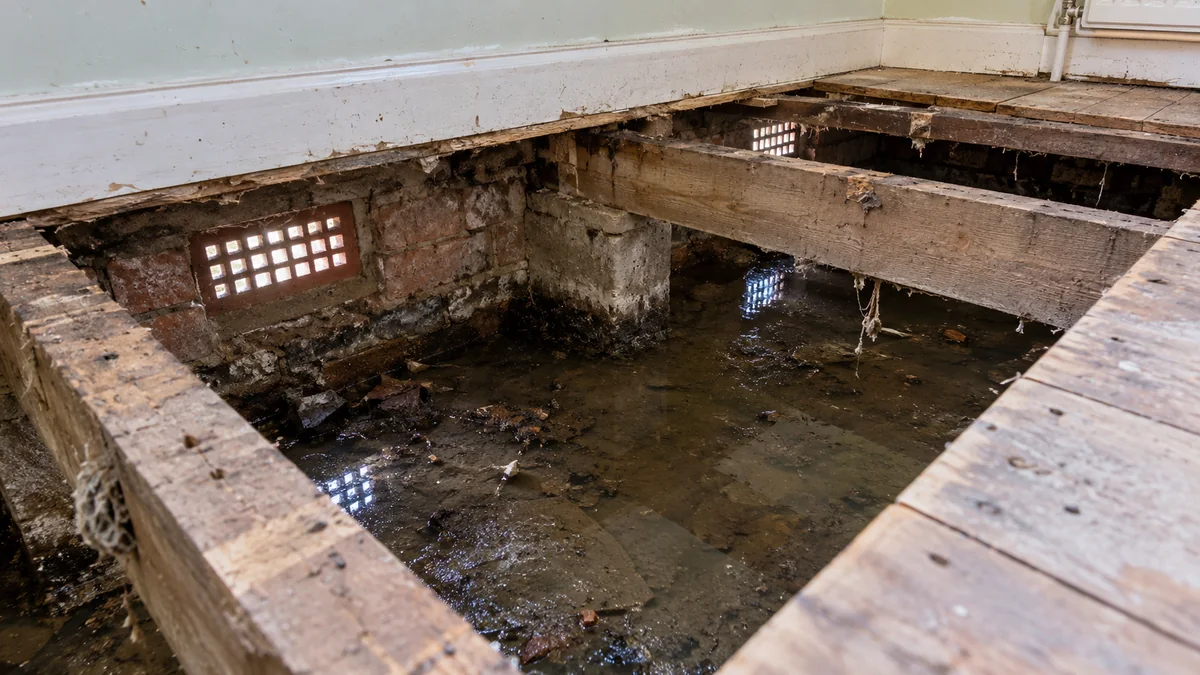
A wet floor void does not identify the cause
Water beneath a suspended timber floor may have entered through airbricks, crossed a threshold, leaked from plumbing or risen from the ground. The water route matters because drying the void does not stop recurrence. Inspection should cover sleeper walls, joist ends, ventilation paths, debris and whether standing water is contaminated. Do not lift boards over suspected electrical hazards or enter confined voids without suitable assessment.
What a sensible report should explain
Ask how the water was located, which timbers and supports were inspected, whether contamination was present and how the void will be dried and checked. Damp timber is not automatically decayed, but prolonged moisture can create conditions for damage. Structural movement, failed joist bearings or voiding around supports deserves independent assessment. Reinstating flooring before the subfloor has recovered risks trapping moisture and repeating smells or deterioration.
What kind of ground movement are you seeing?
Floodwater near foundations is alarming, but a puddle beside a wall does not establish that the house is being undermined. Look for changes rather than assumptions: fresh settlement of paving, a new void beside the foundation, cracking that has appeared or widened, or soil washing out of a drain trench. Photograph changes from a safe distance and record when they occurred.
If a wall is visibly moving, the ground is collapsing or the building appears unsafe, keep clear and seek urgent professional assessment. Avoid digging beside the footing to find out for yourself.
How moving water can affect support
Flowing water can scour loose material, especially around damaged drains, poorly compacted backfill or channels that concentrate runoff. Standing water is a different situation: some soils soften when wet while others change volume through wetting and drying. The significance depends on the ground, depth and condition of the foundations and how long the situation persists.
Older houses may have shallow footings, but depth alone does not prove a defect. An engineer needs evidence of movement and the ground conditions before recommending structural work.
Look for the source before treating the symptom
A leaking surface-water drain can carry fine soil away over time; an overflowing soakaway may saturate an area repeatedly. Water can also arrive from a nearby slope or highway. A drain survey, level survey or targeted ground investigation may be more useful than pouring concrete into a depression.
Never direct new drainage towards an adjoining foundation or property. Solving the source is important before making good sunken paving or filling a local void.
When a structural engineer is appropriate
New stepped or tapered cracks, doors becoming difficult to use, a visibly rotating wall or a sudden change in floor level warrant careful inspection. These signs have several possible causes, so a structural engineer should assess the evidence rather than assuming subsidence.
The engineer may recommend monitoring, investigation of drainage, limited opening-up or other tests. Underpinning is a major intervention and should not be chosen merely because a flood occurred.
What should repair quotations include?
Where ground or drainage repairs are justified, ask for a clear scope covering investigation findings, service locations, safe excavation, protection of adjacent structures, backfilling, compaction and reinstatement. If the works approach a party wall or shared boundary, check whether further professional advice or statutory procedures apply.
Retain pre-work photographs and the final survey records. This provides a useful baseline if movement or flooding recurs.
Reliable further information
For current warnings, official flood-risk maps and safety advice, use the relevant government service. This website cannot assess live conditions at your home.
Government flood guidance · National Flood Forum · Citizens Advice